
The railways of South America tell a story of ambition, contrasts, and missed opportunities. Visionaries once dreamed of an extensive railway network that would connect the vast landmass and drive economic growth. However, while some countries embrace modernization, in others, trains are little more than relics of the past. Still, the continent offers some of the most breathtaking train journeys in the world, both for tourists and daily commuters.
Searching for connection
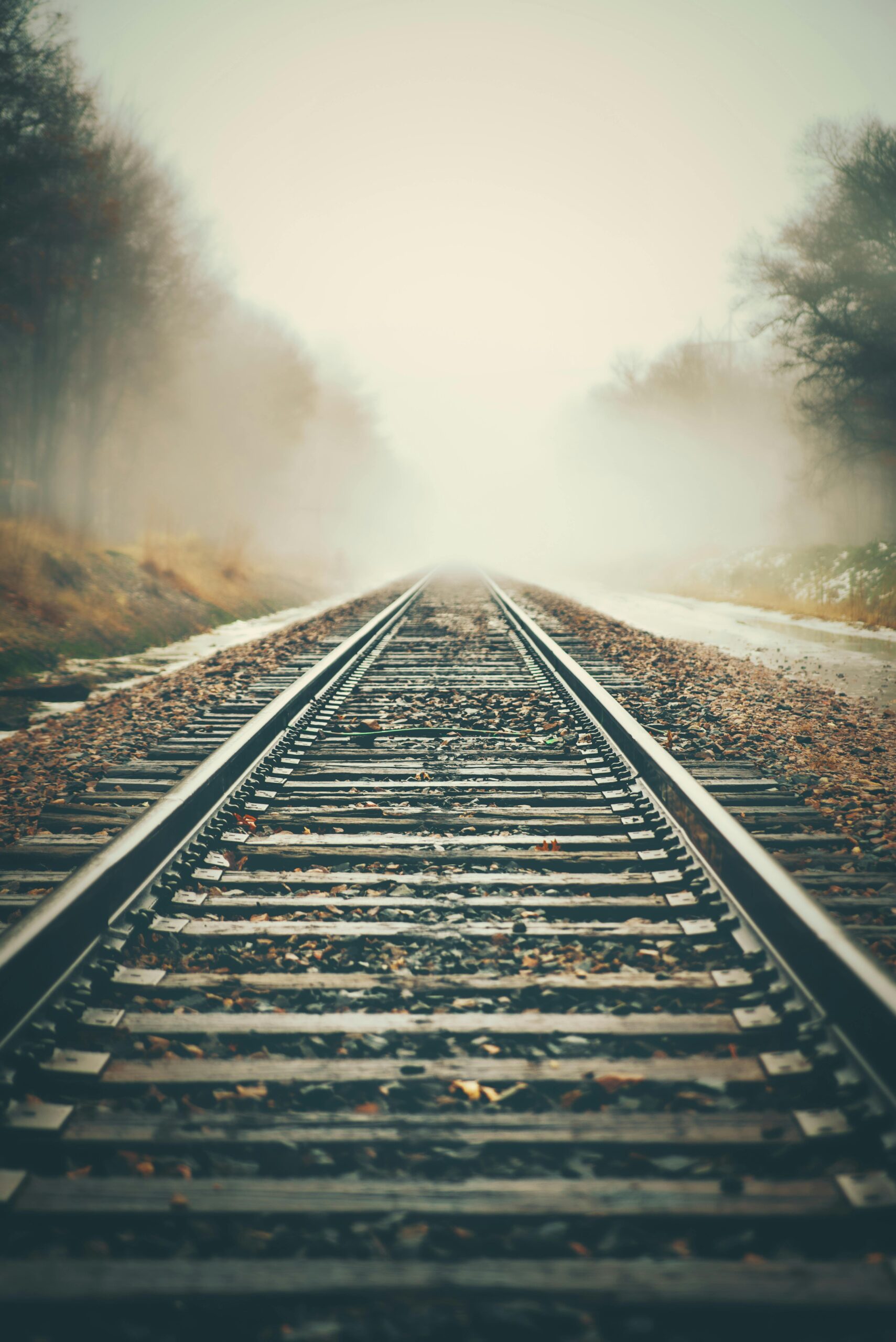
In Argentina, the remnants of a once-great railway network serve as reminders of a bygone era. Trains were once the lifeblood of the country, but today, only a few long-distance routes and urban connections remain. Yet, there are still gems to be found, such as the iconic “Train to the Clouds,” which takes travelers through the Andes at a dizzying altitude of 4,200 meters. Peru offers a different kind of experience, where history comes to life on the tracks. The Ferrocarril Central Andino, a 19th-century engineering marvel, remains one of the highest railways in the world. However, it is the routes to Machu Picchu that truly capture the imagination, with the train journey itself being an integral part of the experience.
Brazil, the largest country on the continent, surprisingly has very few passenger train services. For decades, the focus has been on roads and air travel, leaving railway development largely stagnant. Still, plans exist, such as the long-awaited high-speed rail line between São Paulo and Rio de Janeiro—though the project has faced repeated delays due to economic and political obstacles. Chile presents another contrast: while the capital, Santiago, boasts an efficient and modern metro system, long-distance trains have largely disappeared due to the country’s challenging geography.
The future of rail transport in South America remains uncertain but not without promise. Many countries are working on modernizing existing lines, primarily for freight transport. High-speed rail projects remain a dream, but urban networks are being improved to ease growing traffic congestion. At the same time, regular railway services struggle with outdated infrastructure and safety concerns, while tourist routes are often well-maintained. As investment in rail infrastructure increases, South America may yet take a step toward realizing its original dream: a better-connected continent.
Peru: Ollantaytambo to Aguas Calientes
Recommended by Eleanor from Elevate Your Escapes
The Peru Rail line from Ollantaytambo to Aguas Calientes is truly a special experience! Many people will ride this line to get to Machu Picchu. It provides the most picturesque landscapes and entertainment along the way. Peru Rail is set up for tourists, so the cars are clean, comfortable, and modern.
Within the heart of the Sacred Valley, the small town of Ollantaytambo is a charming Inca village. It’s a great place to stop before continuing on to Aguas Calientes, famous as being the closest area for experiencing Machu Picchu.
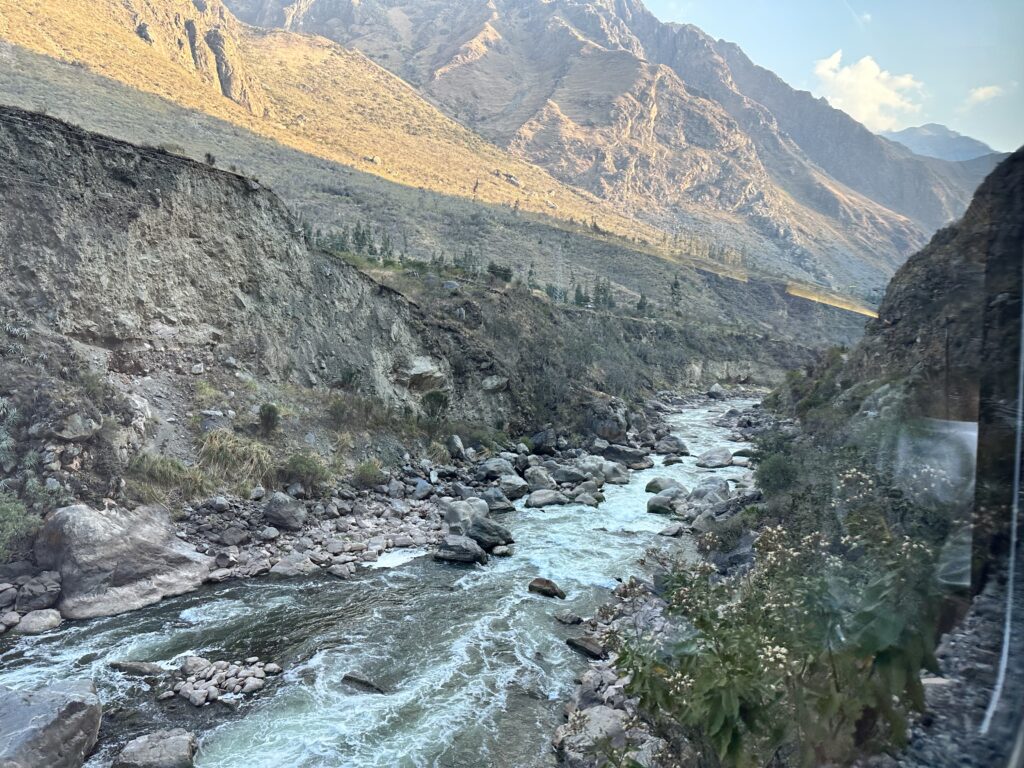
You start at the Ollantaytambo station, where dancers dressed in traditional outfits and with musical instruments will welcome you as you wait and then board the train. The train then travels through a dramatic landscape of gorgeous mountains, forests, and the Urubamba River. You’ll pass remote villages, ancient terraces carved into mountainsides, and the occasional glimpse of hikers along the Inca Trail. The journey takes approximately 1.5 hours.
Peru Rail offers several classes of service, from the budget-friendly Expedition to the luxurious Belmond Hiram Bingham, complete with gourmet meals and live music. Even in the standard carriages, the journey feels comfortable and immersive. It’s a very smooth ride. The large panoramic windows of the Vistadome and Expedition trains provide incredible landscape views, and are worth any extra cost.
During the ride, you’ll be treated to onboard entertainment by a mix of dancers. When I traveled, two dancers acted out a love story, narrated over the speaker system. We passed other trains with dancers showcasing different acts.
When you arrive in Aguas Calientes, you’ll find a bustling, colorful hub of restaurants and markets. It’s very cool to see because the town is accessible only by train or foot (hiking the Inca Trail). The train station is a hub for visitors, and it often is very crowded around train times.
Argentina: Train to the end of the world
Recommended by Pamela from The Directionally Challenged Traveler
Riding the Train at the End of the World (or El Tren del fin Mundo) in Ushuaia, Argentina, felt like stepping into a storybook. As the southernmost railway in the world, this narrow-gauge steam train traces the same path that once carried prisoners from Ushuaia’s penal colony to their work sites in the early 20th century.
The journey began at the “Estación del Fin del Mundo,” a station that is steeped in history. There are pictures that show the history of Ushuaia as a penal colony and the city’s development over the years. As the train chugged along, the landscape unfolded in a way that left me breathless. The route takes you through the Tierra del Fuego National Park, showcasing the pristine wilderness of Patagonia.
One of the most memorable stops was at “La Macarena Waterfall.” Here, I stepped off the train to breathe in the crisp air and take in the stunning views of the waterfall cascading against the backdrop of dense forests and snow-capped mountains. The sense of isolation, with only the sound of the water and the distant whistle of the train, was unforgettable.
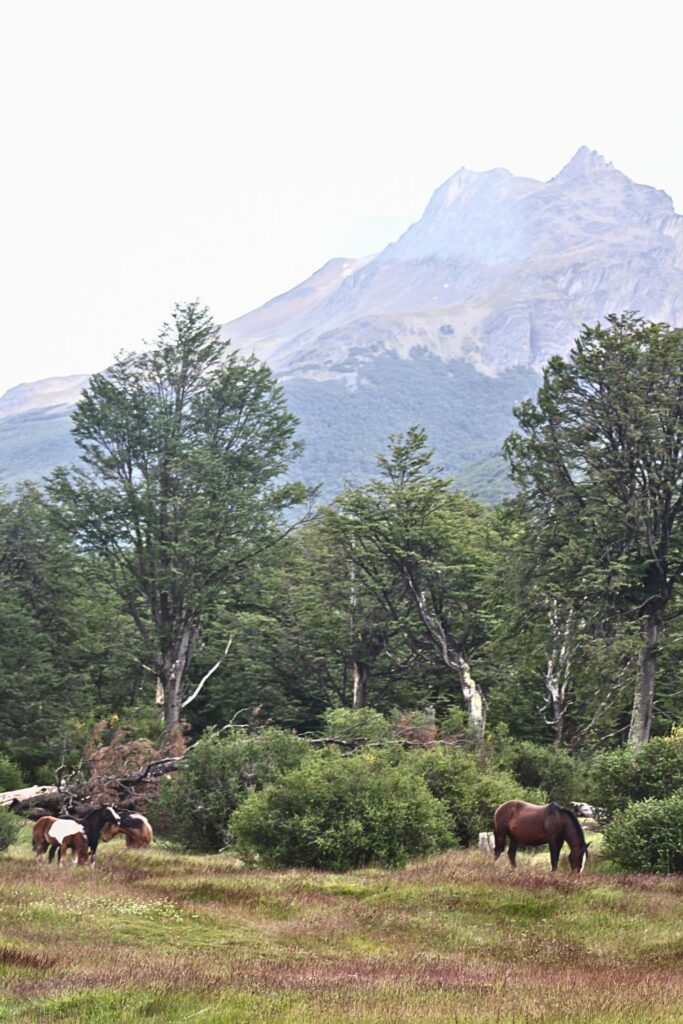
Another highlight was passing through the “Cañadón del Toro,” a deep gorge surrounded by rugged terrain. The train’s slow pace allowed me to fully absorb the surreal beauty of the Patagonian wilderness, with its forests, peat bogs, and wild rivers. We even got to see wild horses!
As the train approached its final stop at “Estación Parque,” I couldn’t help but reflect on the blend of history and natural beauty that made this journey so special. The Train at the End of the World is not just a ride; it’s an experience that connects you to the history and untouched essence of Patagonia.
Argentina: Train to the clouds
Recommended by Naomi from Probe around the globe
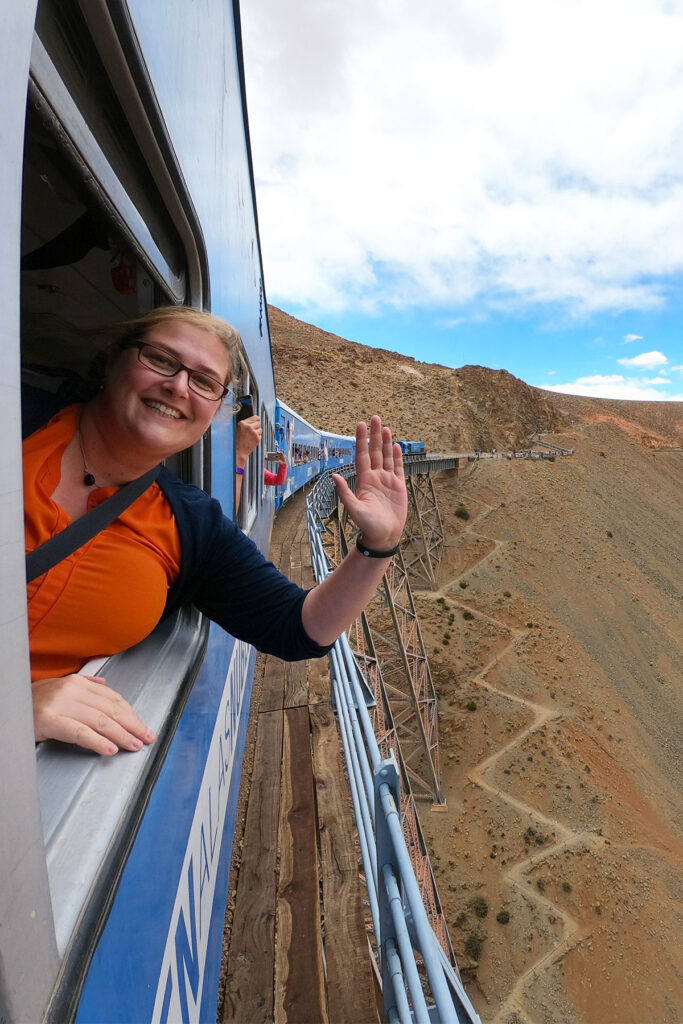
Train to the Clouds, is an epic railway day trip in the Salta region of North West Argentina. You travel by tourist train from San Antonio de los Cobres to the La Polvorilla Viaduct and back. It is only an 18 km railway stretch but the train zigzags painstakingly slow through the high-altitude desert landscape. Once it reaches the La Polvorilla Viaduct at an altitude of 4,220 meters (13,850 ft) above sea level, the train slows down even further to drive the train across the viaduct.
Once the train reaches the other side of the bridge, it goes back as you run out of rails. This allowed me to see the epic view from the viaduct twice and get some spectacular pictures.
If all this impressive data isn’t enough, the Tren a las Nubes puts up quite a show. You can start your day trip from Salta or San Antonio de los Cobres. From the moment the trip started, I was entertained. I saw traditional dance, music, and folklore, indulged in mouth-watering empanadas, and witnessed the striking of the Argentinian flag and the national anthem from the viewpoint. And of course, the train ride itself. Because the stretch of the railway is quite short, the train goes out and back, giving everybody a chance to sit on the ‘best’ side of the carriage to enjoy the views.
The name “Tren a las Nubes/ Train to the Clouds” comes from the phenomena of cloud condensation at the high altitude around the bridge, giving the impression that the train is floating through the clouds. Chances of this are actually very limited, but when it occurs, the views from the train will be limited but it will be spectacular to see the train floating across the gorge.
Argentina: Tren Patagonico
Recommended by Audrey of Che Argentina Travel
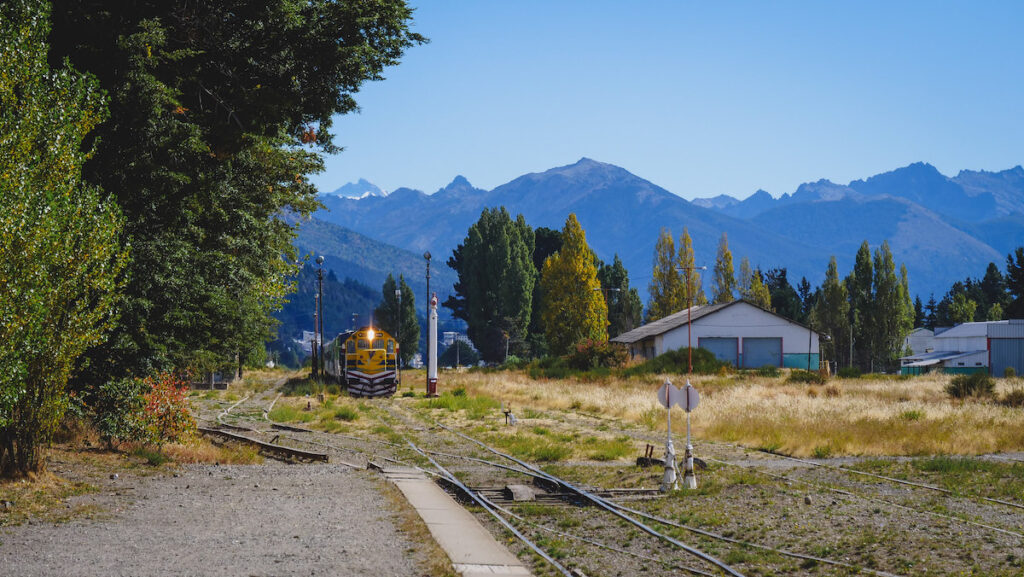
I have done a lot of train travel across Argentina, specifically Patagonia, and one journey that really surprised me with its views and wildlife was the Tren Patagonico!
This is an overnight train journey that covers 800+ kilometres between the cities of Bariloche at the foot of the Andes Mountains and Viedma near the Atlantic Coast.
This epic 18-hour train ride crosses the width of Argentina, and it is not to be confused with the more famous Old Patagonian Express, which is more of a tourist sightseeing train and a much shorter route!
Over the course of our trip aboard the Tren Patagonico, we got to watch the scenery change from mountains to lakes to steppe. Plus, the wildlife also changed and we witnessed hares, hawks, guanacos and plenty of sheep! While most of the journey happens overnight (meaning there is little to see!), getting to watch the sunset over the Patagonian steppe and seeing it teeming with life as the landscape was washed aglow was a true highlight.
One important thing to note if you’d like to ride the Tren Patagonico is that it only runs once a week! It typically travels from from Viedma to Bariloche on Fridays, and then Bariloche to Viedma on Sundays, so you need to plan accordingly.





0 Comments