
In Southeast Asia, everything seems to be moving faster and faster. More flights, more resorts, more visitors. Thailand and Vietnam have been popular with travellers for many years, but are now paying the price: overcrowding, loss of authenticity, and an ever-growing distance between tourism and the daily lives of locals. Right in between lies Laos — a country that has consciously chosen a different path.
Laos is not yet a destination everyone has on their radar. And precisely because of that, travelling here feels different. Slower. More human. Tourism has not yet overwhelmed the country, and you notice this in everything: from the way you are welcomed to the places you stay and the activities you take part in. This article explores Laos as a sustainable destination.
No rush, no crowds, no facade
Travelling through Laos feels more authentic, even though most tourists still visit the same places and you will certainly find travel agencies on every corner and hear someone asking “tuk-tuk?” every few steps. Still, Laos feels calmer. The tourists who come here are more often searching for a unique experience rather than ticking off a checklist of highlights, as is often the case in Thailand. It also helps that the country itself actively tries to preserve this authentic atmosphere and avoid being overwhelmed by mass tourism. Tourists are still guests, rather than a natural part of the streetscape, and most visitors are respectful and adapt to local customs.
This creates an experience that is becoming increasingly rare: the feeling that you are visiting a place as it truly is, not as it has been set up to be photographed by tourists.
A conscious vision for tourism
What many travellers do not realise is that this sense of calm is no coincidence. For years, the Laotian government has pursued a policy focused on sustainable, small-scale and local tourism. Not by simply attaching the word ‘eco’ to everything (a label I personally do not always trust), but by making concrete decisions about how and where tourism is allowed to develop.
Laos does not promote large-scale resorts or tourist hubs disconnected from their surroundings. Instead, there is a strong focus on community-based tourism: tourism that is developed in collaboration with local communities, with revenues flowing directly back to the people who live there.
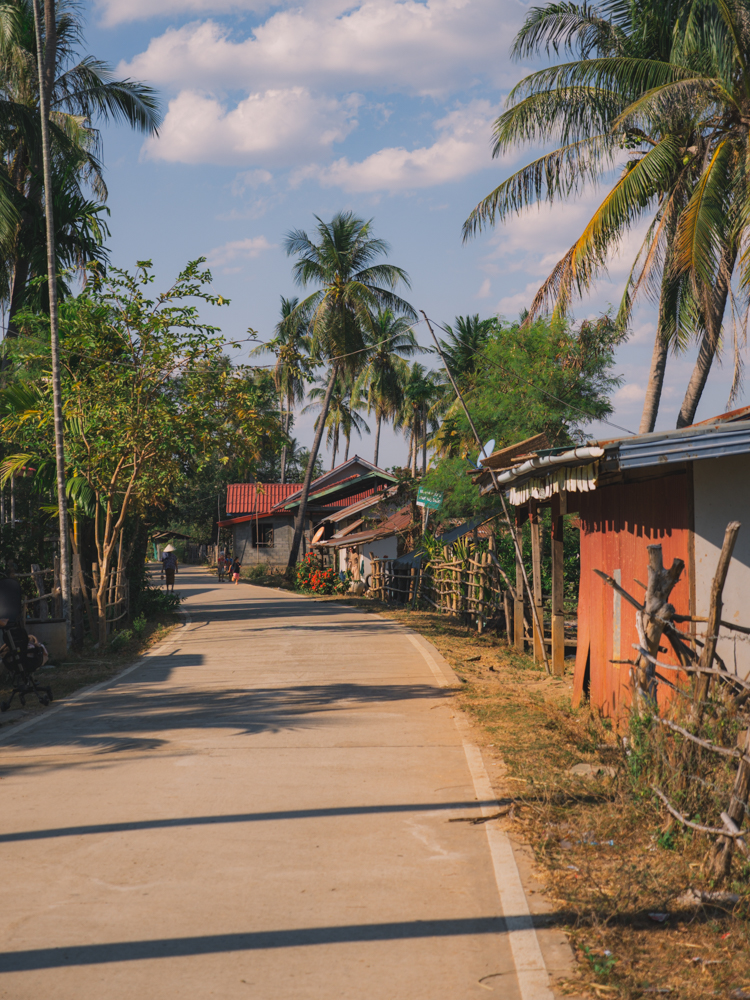
Villages decide for themselves whether they want to receive tourists. Overnight stays take place in homestays or small guesthouses, often run by families. Activities are linked to daily life rather than being staged performances for visitors. As a result, tourism remains supportive rather than disruptive.
Of course, there is always a balance to be found. A tour to a small village where you learn about local life but are then surrounded by shops selling “authentic” woven clothing and scarves is, naturally, adapted to tourists to some extent. You do learn a lot and see real aspects of daily life, but the line between authentic and an “authentic exhibition” can sometimes be a little blurred. That said, everyone involved in these tours is still local and benefits from the income, making it a far better choice than booking a group tour through a major operator with chain hotels and international tour guides.
Nature first, tourism later
Laos is largely made up of mountains, forests and rivers. This nature is not only impressive, but also vulnerable. Large parts of the country fall under national protected areas, where tourism development is strictly regulated. Large-scale construction projects are simply not allowed. You genuinely pay entrance fees almost everywhere — viewpoints, waterfalls, nature parks, everything. Prices range between 20,000 and 50,000 kip (around €1–2), and the income is used entirely for nature conservation. A fair investment, and a solid system for protecting the environment.
At times, this also means you cannot simply go everywhere independently and are required to book a tour. While that €1 entrance fee hardly breaks the bank in affordable Laos, tours do add up. A day trip quickly costs €30–90 depending on the activities, sometimes including entrance fees, lunch and an almost obligatory visit to a souvenir shop. Tours also tend to operate only in groups, or you may be asked to pay the equivalent of several people if travelling alone. As a solo traveller, this limited me quite a bit.
I wanted to do a cultural hike in Nuang Namtha, as they offer some trails or daytrips where you visit the villages around, where minority tribes live. Doing this as a private tour, would be € 100-150, which definitely wasn’t my type of budget. But once more people join, the price per person drops. In the end I got to join a 2 day trail, which wasn’t exactly as cultural as I would have wanted. But because there were already 4 people going, it only cost me € 65 for 2 days.
Sustainable accommodation everywhere you look
Almost everywhere you go in Laos, you will find a wide range of ecolodges and farm stays. (I am writing this from a lovely farm-stay hostel in Nong Khiaw — so even budget travellers have excellent sustainable options.) If a place is not particularly “green”, it is still usually a guesthouse or locally run hostel, as international investors are rare. Occasionally, you may come across a place run by, for example, a French or Australian owner, often with a local partner, though not always. However, this happens far less frequently than in many other countries.
This is largely because it is not possible to buy land in Laos. As a communist country, all land belongs to the state and can only be leased. These are not short contracts — leases of 30 to 50 years are common — but the land ultimately remains state-owned. If, for example, a leaseholder passes away, the land reverts to the state and cannot be inherited by children or other family members.
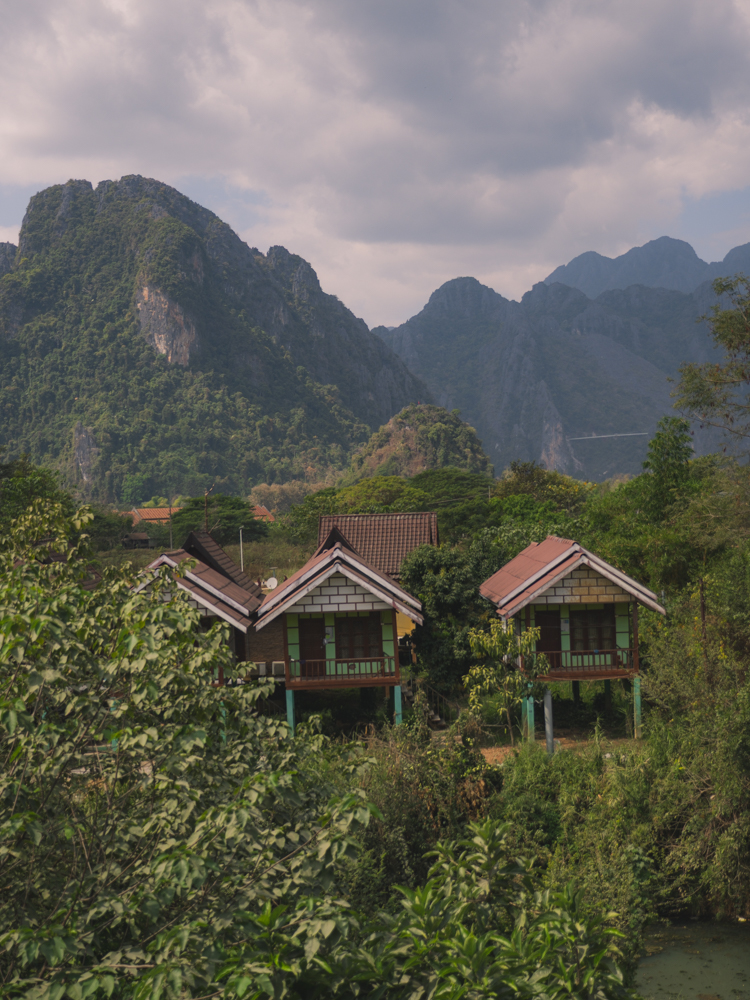
This makes Laos less attractive for investors whose primary goal is profit. The same applies to Thailand, although you will find more chain hotels there simply because tourism plays a much larger economic role. As Laos has not yet become a mass tourism destination, large international hotel chains have largely stayed away. And in an era where more and more travellers are seeking authentic experiences, it is easier for an “emerging” destination to preserve that authenticity. Tourists want to stay in guesthouses, eat with the family, receive tips from locals and feel as though they are visiting distant relatives or friends. Laos offers a personal experience, and there is a strong chance that this style of travel can be maintained.
This has a major sustainability benefit: your money stays local. It supports families, creates employment and prevents profits from disappearing into the hands of foreign shareholders.
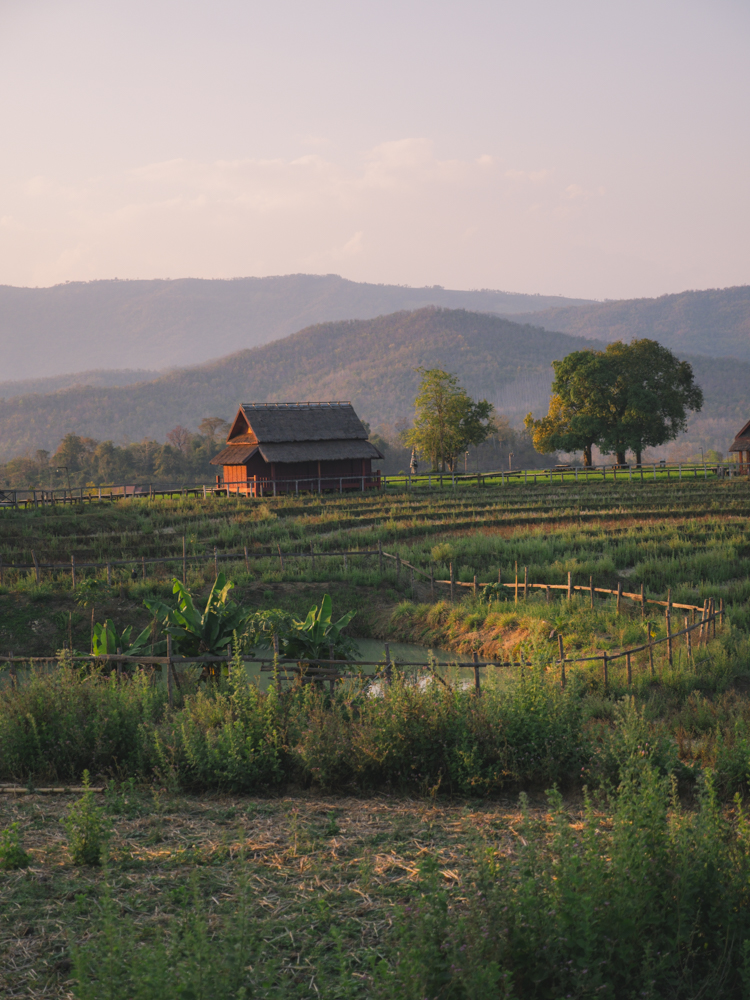
My personal favourite sustainable accommodation was staying at a rice farm just outside of Luang Prabang. It was a fairly new farmstay, so when I arrived I was alone on the farm. Siphone runs the farm, that has been in the family for generations. It’s only a 30 minute walk to the famous Kuang Si waterfall and the views are amazing. You can book a half day experience on the farm, where they will teach you everything about running a rice farm in Asia for only € 35. I unfortunately didn’t have time, but if you do this, please let me know what it was like!
Activities with cultural value
Tours and activities in Laos also feel different. No large groups with flags or tightly scheduled programmes. Instead, you choose from small-scale, often locally organised experiences. Think of walks through rice fields with a village guide who explains life in the region, multi-day treks where you eat and sleep with a local family, or boat trips with local skippers who have navigated these rivers all their lives. These tours are unique and always have a local element, such as a homestay or local meal. I did not see a single tour itinerary in Laos that did not include at least one sustainable element.
Creative workshops – such as weaving, textile dyeing, pottery or cooking – are led by local artisans, often in small villages, with transport provided from nearby towns. You can opt for a short one- or two-hour workshop, but many offer half- or full-day programmes including local history, a walk through the village and a freshly prepared local lunch, often for less than the cost of a budget hotel room in Europe. You not only learn a skill, but also the story behind it. And if you buy something, you know exactly who you are supporting.

Local shops over generic souvenir stores
In Laos, shops are not extensions of mass production. Instead of endless rows of identical souvenirs, you will find handmade goods, local textiles and traditional crafts. Chinese imports are present — Laos has close ties with neighbouring China — but the streetscape is still dominated by local creations, especially woven products made by ethnic minority groups, each with their own distinctive patterns.
This makes shopping not only more enjoyable, but also more meaningful. Every product tells a story about the place you are in and contributes to preserving local knowledge and skills.
Slow growth as a strength
Laos invests little in aggressive international marketing. The country does not brand itself as a “must-visit” or “hidden gem”. Growth is allowed to be slow. Manageable. In balance with nature, culture and community. Whether all locals fully agree with this approach, I cannot say. Tourism does bring money into the country. But I believe many people see how Thailand has been overwhelmed by mass tourism and recognise that this is far from ideal. Most people in Laos seem happy that tourism remains at a manageable level and that the atmosphere stays relaxed.
This may make Laos less popular on social media, but all the more valuable for travellers who want to travel consciously and take their impact seriously.
What do you notice most as a tourist in Laos?
As a tourist, you notice Laos’s sustainability in many ways. The abundance of sustainable accommodation is the first thing that stands out. And as mentioned earlier, virtually every natural site is protected and requires an entrance fee. That alone is noticeable, but you also see that travellers make conscious choices about which activities they are willing to spend money on. Laos itself is extremely cheap: meals usually cost between €2 and €4 (more for Western food). However, transport, entrance fees to popular sites and mandatory tours — where independent access is not allowed — can add up quickly.
Travelling Laos on a budget is very doable, but these extra costs can still become significant. As a result, many travellers end up making similar choices. The highest-rated tours are booked most frequently, as people are reluctant to spend €50 on a day trip no one has recommended. This also means many companies offer exactly the same tours, keeping tourists concentrated in the same places.
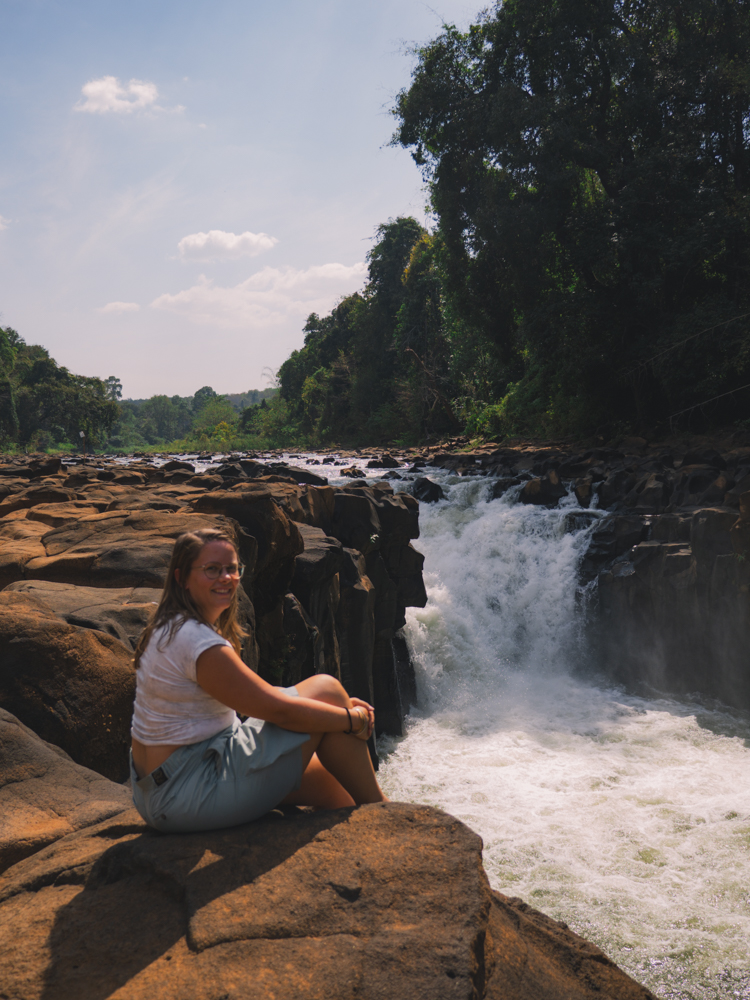
As an example: in Pakse, I hired a private scooter driver, as I do not ride scooters in Asia myself. This cost €27 per day – a fair price. Around Pakse there are around ten different waterfalls, several coffee plantations, viewpoints, and of course a temple and a large Buddha statue. When I asked which waterfall was the best, I received a fairly standard answer: “this one is for swimming, this one is for hiking.” But there were many more options, so I kept asking. It took some convincing to visit a “run-down” waterfall instead of the popular ones.
You really do need to do your own research if you want to see more unique places in Laos, and transport options are more limited. Local buses often depart from inconvenient locations, stop infrequently and run only occasionally. It is easy to end up relying on private transport if you want to go somewhere different. While these options are not expensive in isolation (after all, €27 for a full day trip is reasonable), they add up much faster than the €5 Grab rides you might use in Thailand.
You also notice that other tourists tend to be calmer. There are no heavy party crowds here — or at least far fewer than in Thailand. Although many travellers combine both countries, most party-focused tourists head to Vietnam, while in Laos you mainly encounter older travellers (who visit only Laos or Laos and Cambodia) and younger travellers seeking a slower pace. More nature, more activities like hiking, scooter loops or a hot-air balloon ride in Vang Vieng. The overall atmosphere in Laos is calmer. Tourists take their time, and locals are relaxed, not constantly trying to sell something, simply living their lives alongside visitors. More authentic, in that sense.
The sustainable future of Laos
While many countries are now trying to repair the damage caused by mass tourism, Laos shows that there is another way. By choosing small-scale development, local involvement and nature conservation from the outset, the country has developed a form of tourism that is not only enjoyable for visitors, but also sustainable in the long term. Laos is not a destination for those who want to see everything quickly. (That would be difficult anyway, getting from A to B in Laos is not straightforward.)
It is a destination for those who want to linger, listen and move at a different pace.
And perhaps that is exactly what sustainable travel will mean in the future.





0 Comments