
I actually don’t like the question ‘is it safe there?’ Indeed, it is often full of prejudice. A question asked mostly about countries with a culture different from ours. The idea of insecurity comes mainly from misunderstanding. Whether you experience a country as safe is, in my opinion, largely personal. How well do you adapt to that foreign culture?
When I announced that I was going to Cuba, I received many questions about safety, but mostly substantive ones. Questions about the recent power cuts – would it be safe in the dark? Or comments like, ‘I had read somewhere that crime has increased because the situation in the country has deteriorated and resources are scarce.’
These are understandable questions. And we have also done our homework. We did research, asked people. And came to the conclusion: it was actually not that bad. So we went and this was our experience: is Cuba safe?
April 2026 update
Not much has changed on the below, so keep reading for the full story. However, of course the situation in Cuba got a lot more dire. This does come with an added risk of people becoming so desperate, they might become violent. I have friends in Cuba that I’m in contact with and nobody has mentioned anything yet. But I do advice a little more caution if you still decide to go. Don’t flash around luxery products or money, only bring small amounts in case of pickpocketing etc.
Our experience with safety in Cuba
I can tell several stories about moments when we actually felt very safe in Cuba. People are incredibly sweet and polite. Men will ask you for a dance, but ‘no’ is generally accepted, and the intention is mainly dancing. Dancing is so deep in the culture, it’s not necessarily a way to hit on someone, as you might be used to.
But the experience as we had in a club in Matanzas was a sense of security like I have never experienced anywhere.
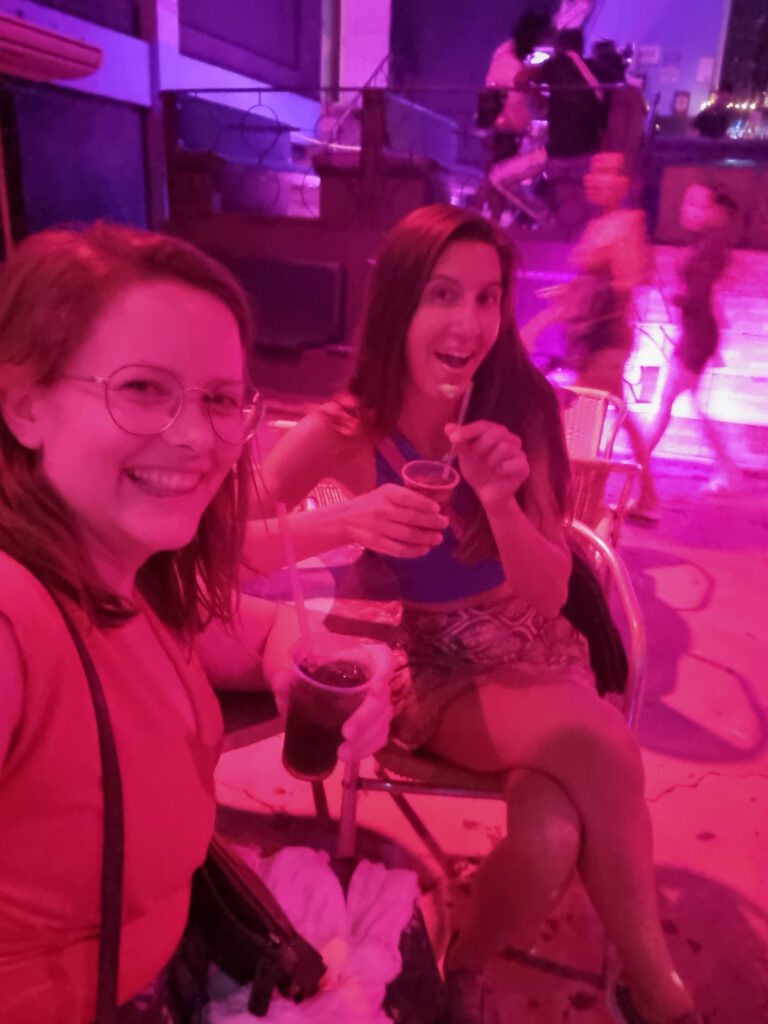
We wanted to dance, because Cuba is the land of music and salsa, right? But in Havana, we just couldn’t find it. Maybe because of the blackouts? So in the second big city we visited – Matanzas – we went looking again. The two places known as clubs were completely dark and empty. Maybe then the blackouts really do mean the end of Cuba’s cosy dance culture?
We asked the lovely woman at our casa particular, and she said her son went to a club in Matanzas every weekend. It had to be open! She would app him. Turned out that the power came back at 23:00 and then the clubs still opened, we were just too early. So the next evening we took our time extensively for our dinner and walked past the club around 11pm. Dark. Until a taxi stopped and I started to hesitate. ‘Let’s have a look,’ I said to my friend. And yes – the lights came on and a friendly bouncer greeted us. We chatted with him for a while, until everything was ready and we were allowed inside.
Weird men are everywhere and so here too we met someone with strong stories. At first he was funny and he seemed harmless. But eventually we just wanted to dance and ignored him further. After a while he came around again and I was tapped on the shoulder. Someone from the group of men who had been standing next to us for an hour showed his phone. In Google translate, it said, ‘Just ignore him, he just wants money.’ Turned out these men had been keeping an eye on us all along. We chatted a bit about our creative jobs, showed each other pictures of our work and he taught me some dance moves.
A moment later, I turned around – and saw that our bouncer friend was standing about 2 metres away. Not alone. There were four (!!!) bouncers standing in a row watching us. We were the only tourists, and they made sure we were safe.
When the weird guy got nasty and I tried to push him away, they were beside me so quickly that I barely realised what was happening. We had a great night. With a dance battle with a group of girls (which we won, after which the boyfriends were taken away from us one by one), new dance moves from the guys next to us and not a single moment when we felt uncomfortable or felt we needed to pay better attention.
And this is just one example of how safe I felt as a tourist in Cuba.
Safety is subjective. But we genuinely felt safe. Everywhere. The power cut did not affect that at all.
When we asked a local
In Trinidad, we did a free walking tour. As tourism has declined, we were the only ones. So plenty of room to ask all the questions we wanted to ask. So also the question ‘is Cuba safe for tourists?’. He confirmed the feeling we already had: Cuba is incredibly dependent on tourism. If crime towards tourists were to take place, the whole country would suffer. He said jokingly (yet also seriously) ‘they can do anything to me and nobody cares, but if tourists are harassed, it harms the whole of Cuba’.

That means there’s a lot of social oversight. And that’s exactly what we noticed. Everyone in the street knew we were the guests of Casa XX. And everyone kept an eye on us — in a friendly way.
For example, in Viñales, when we came back from a long bike ride in pouring rain. We could feel the whole neighborhood looking up and thinking, “Ah, they’re back home.”
Is Cuba safe? This is what the UK government says
According to the UK Foreign, Commonwealth & Development Office (FCDO), crime levels in Cuba are generally lower than in the UK, but the challenging economic situation has led to an increase in opportunistic crimes. Muggings can occur, particularly at night. Pickpocketing and bag-snatching are risks in crowded areas such as Old Havana, public transport, and nightclubs. It’s advisable to avoid carrying large amounts of cash or wearing expensive-looking jewellery. Valuables like mobile phones and laptops are particularly attractive to thieves. Thefts from private guest houses (casas particulares) have been reported, so make sure your door has a lock and that you don’t invite people over. A common scam is where someone will flirt with you so you bring them to your place, then they will take whatever they can.
Practical Safety Tips
To enhance your safety while travelling in Cuba:
- General safety precautions should be taken like anywhere else, Don’t leave your belongings unattended and be mindful for pickpockets and scams.
- Be cautious with new acquaintances: Some individuals may pose as tour operators or taxi drivers to exploit tourists. Only use services from reputable companies.
Additional Considerations
Internet access: Internet access can be limited, and during times of political tension, it may be blocked. Plan accordingly and inform someone of your travel itinerary. verhalen, zeker niet uit Amerikaanse media, die vaak een politiek gekleurde bril op hebben als het over Cuba gaat.
Power outages: Cuba experiences planned electricity outages, including in Havana. In other areas, power outages can be longer. It’s advisable to conserve fuel and mobile phone charge, especially when travelling outside Havana.
Safety is also a feeling
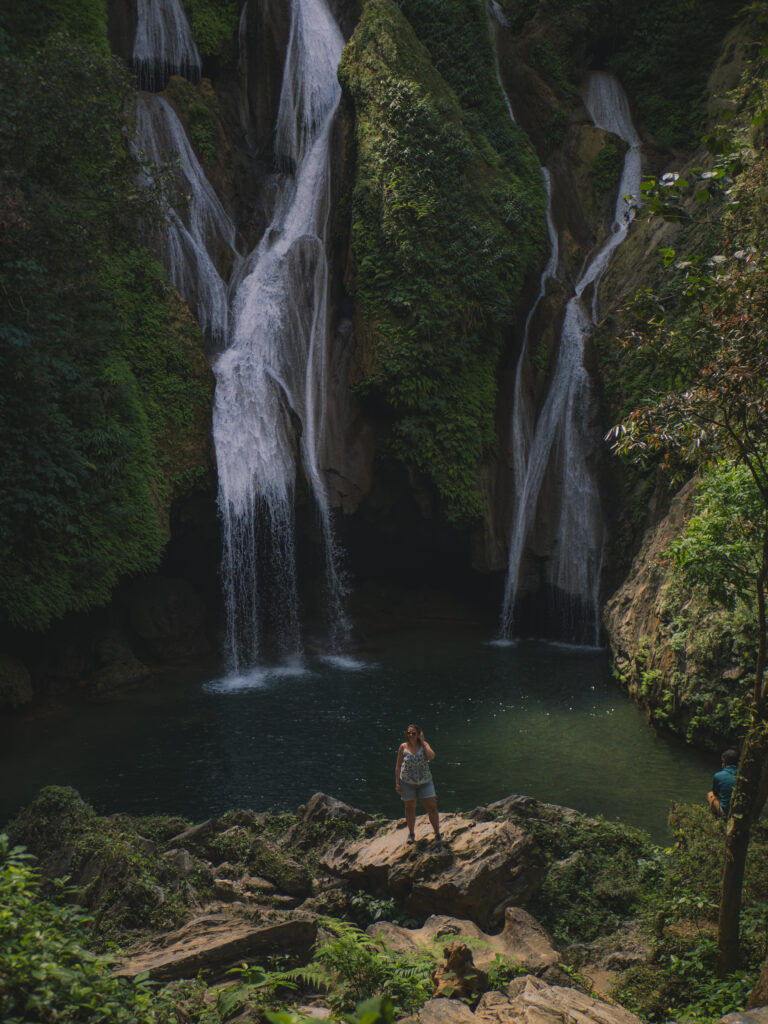
Safety is ultimately subjective. What feels tense to one person might feel totally relaxed to someone else. It depends on your travel experience, the cultures you grew up with, and how easily you tend to worry.
I often feel like unsure travellers are more likely to be targeted by petty criminals than those who carry themselves like they’ve been to the country twenty times before.
But for us, the reality was this: not once in Cuba did we feel unsafe. On the contrary — we felt seen, protected, and genuinely welcome.
Don’t let the stories scare you off. Do your own research, talk to travellers who’ve been there recently, and trust your own experience. And who knows — maybe you’ll be dancing the night away in a Cuban club soon too, with a whole community quietly making sure you get home safe.
Still feeling a bit unsure? I’m planning to organise a group trip to Cuba — probably female only. Want to come along? Sign up for the newsletter to stay in the loop.




0 Comments