
Cuba left an impression on me like no other country has before. It’s a land full of warmth, stunning nature, music, and kindness. But it’s also a country grappling with a deep economic crisis. As a tourist, you’ll certainly notice this too. One of the biggest challenges you’ll face when travelling is transportation in Cuba – or more accurately, the lack of fuel.
However, that shouldn’t stop you from exploring the island. You just need to know how to get around in Cuba. We travelled through western and central Cuba, and here’s how we managed it.
March 2026 update: most in this blog is still accurate, but with the current situation there are definitely some things to keep in mind. I’ve added updates per form of transport, if things have changed. April 2026: Russia is sending oil to Cuba, so the situation might ease up again soon. Do you have a trip planned for later this year? Don’t cancel, things might get better. I will keep you updated.
Almost no trains in Cuba

Although you might still come across the occasional railway and there are a few places where trains do run, it’s very sporadic and more of a fun adventure than a reliable way to get from A to B. The train in Trinidad still runs somewhat regularly, but even that’s a bit of a gamble — it’s really a matter of walking to the station and hoping for the best.
Even as a train enthusiast, I didn’t bother. The closest we came to a train was during a walking route in Matanzas. There, the train hasn’t run for so long that the railway bridge over the river is now used as a footbridge by the locals.
In the end, we took a detour — have you ever seen how far apart the planks on a railway bridge are? Absolutely terrifying! We decided the risk of slipping and falling through the gaps just wasn’t worth it, especially when there’s a proper pedestrian bridge nearby.
The Cuban gas crisis: why renting a car in Cuba isn’t recommended
Cuba is, of course, well known for its colourful oltimer cars. You might already be picturing yourself cruising around in a flashy convertible. On paper, the idea sounds perfect: hiring a car and driving from Havana to Trinidad city at your own pace.
But in 2025, that’s no longer quite so carefree. Cuba is experiencing a severe fuel crisis. It’s not uncommon for people to queue for hours — sometimes even days — at petrol stations, only to be told the pumps are empty once they finally reach the front. Some drivers travel dozens of kilometres just to find a working pump.

And believe me, when you’re on a five-hour drive and suddenly notice your fuel tank is nearly empty — with no idea if you’ll even find a petrol station along the way — that’s not the kind of stress you want on holiday.
On top of that, rental cars are expensive. With demand for hire cars dropping, prices have actually gone up. You’ll easily pay €600 for a week, which is incredibly high by Cuban standards.
Alternatives like taxis and buses are much cheaper, and you won’t have to spend hours queuing for fuel. In my opinion, hiring a car simply isn’t worth it while the fuel crisis in Cuba continues.
March 2026: obviously not much has changed here, except the fact that right now, you shouldn’t consider this at all, because you’ll get stranded.
Cuban oldtimers: an example of a responsible ánd fun choice

Still feel like a trip to Cuba wouldn’t be complete without a ride in one of those iconic oldtimer cars? I get it — and the good news is: those old-timers are actually taxis.
In Havana, you can hop in one just for fun, but they’re also a genuine way to get from A to B. In fact, they’re private taxis, which often makes them a better option than the state-run yellow taxis.
You can also choose a private taxi if you’re after a bit more comfort or if you’re travelling at a time when colectivos aren’t running. It’s the perfect opportunity to experience a ride in a classic Cuban old-timer — one of those legendary 1950s American cars, usually privately owned and driven by local chauffeurs.
The great thing is: by doing this, you’re also making a more responsible choice. The yellow taxis are usually state-owned, which means a large part of the fare goes to the government.
Oldtimers, on the other hand, are privately owned — so you’re directly supporting the driver and their family. Especially for shorter trips or routes off the typical tourist trail, this is a better and more sustainable option.
March 2026: the old timers are a great option these days, as the people really need the income it generates. HOWEVER: as we all know, the gas crisis got a lot worse and because of that, taxi prices have tripled. It’s recommended to book your taxi’s for the whole trip on day 1 (or even before), so the taxi’s are ready & waiting and will have secured enough gas. (Don’t question where the gas comes from, just trust they will fix it).
Collectivo’s: the shared taxi’s
Surprisingly, the most budget-friendly option for long distances is a shared taxi: the collectivo. You’ll need to arrange one at least a day in advance, and the taxi driver will then gather a small group of passengers all heading the same way. Sometimes you’ll be squeezed into a small car with five people, and other times you’ll find yourself in a minibus with seven. It all depends on the route and how many people are travelling.
Here’s how it works: you simply ask your casa particular (your local guesthouse or homestay) to arrange a collectivo for you. They know the drivers personally and will know exactly who’s going where and when. You’ll be given a time window, something like “between half past nine and ten”, and it’s important to be ready by a quarter past nine.
Earlier than the scheduled time? I hear you ask. Yes, surprisingly enough, Cuban taxis are often early!

It can happen that you book a collectivo just for yourself, but if that affects the price, it will always be communicated in advance. Honestly, they’ll probably call you three times just to double-check that you’re really okay with it and still want to go. So no worries about suddenly being charged the full fare last minute without warning.
An alternative to the yellow, government owned, collectivos are the private versions, but they can be harder to find and I’m not sure they’re available everywhere. In Matanzas, for example, our host took us to the bus station, where a few trucks were parked, operating as informal collectivos. But these work on a “full is full” basis: if they can’t fill the vehicle, it simply won’t leave. That’s the risk: you might end up waiting for hours, only for the driver to decide it’s not worth the trip.
Paying for the empty seats to get the car moving isn’t appreciated either — due to the fuel shortage, they really won’t go unless the journey is worth it.
If you’ve got time to spare, it’s worth a try, especially since they often depart from the bus station. If the collectivo doesn’t go, and there’s a bus leaving later, you’ll still have a backup plan to continue your journey. But if you’d rather not spend your day waiting around, I recommend sticking to the pre-arranged collectivos for longer trips.
March 2026: might not run. As unfortunately many travellers have cancelled their trip (or had their flights cancelled for them), there won’t be many other tourists. Collectivo’s do get used by locals as well, but they might not go to the same places. I would still ask for this as an option, but count on extra expenses when they don’t fill up and you’ll have to pay the price for a private taxi instead.
Tourbuses: practical but expensive
There are also buses, though strangely enough, they’re often more expensive than collectivos. The base fare is usually similar, but with the bus you’ll often have to pay extra for your luggage.
Another downside is that bus stations aren’t always conveniently located. For example, the one in Havana is quite far from the city centre — and getting there usually requires a taxi. So all in all, collectivos tend to be both easier and cheaper.
That said, if you do want to try the bus or compare prices, there are two main tourist bus companies: Viazul and Mintur. They run set routes between popular destinations like Havana, Viñales, Cienfuegos, Trinidad, and Varadero.
March 2026: last I heard was that they weren’t running. Check their website for up to date information. They might run on a less regular schedule to ensure full buses. But again, they are quite often used by tourists and with less tourists they might just not run at all.
Local buses: cheap but local transport
In the cities, regular local buses also operate. They literally cost just a few cents — but they’re often packed. For many Cubans, it’s their only means of transport, especially now that fuel is so scarce and most people don’t own a car — or can’t afford the petrol.
Importing cars is nearly impossible, and maintaining an oldtimer is extremely expensive. Without income from tourism, it simply isn’t sustainable for most Cubans. That’s why so many oldtimers are used as taxis — it’s the only way for their owners to afford upkeep.
City buses in Cuba are decent, very cheap, and run fairly regularly (though without a fixed schedule). If it’s crowded, let the locals go ahead — they need the space more. But if there is room, it’s definitely a fun and authentic experience to take a ride on a crammed local bus, squeezed in between booming speakers and cheerful locals.
We had some lovely chats on the bus, the kind of spontaneous conversations you just don’t get in a taxi.
March 2026: will run as usual, maybe a bit less regular, but locals depend on them. But mostly in cities.
Walking and cycling in Cuba
An underestimated way of how to get around in Cuba is simply: walking. Towns are compact, traffic is minimal (because: no petrol) and the pace is slow. What’s more, it’s a brilliant way to experience street life – from blokes playing dominoes to children playing baseball with a broken broomstick.
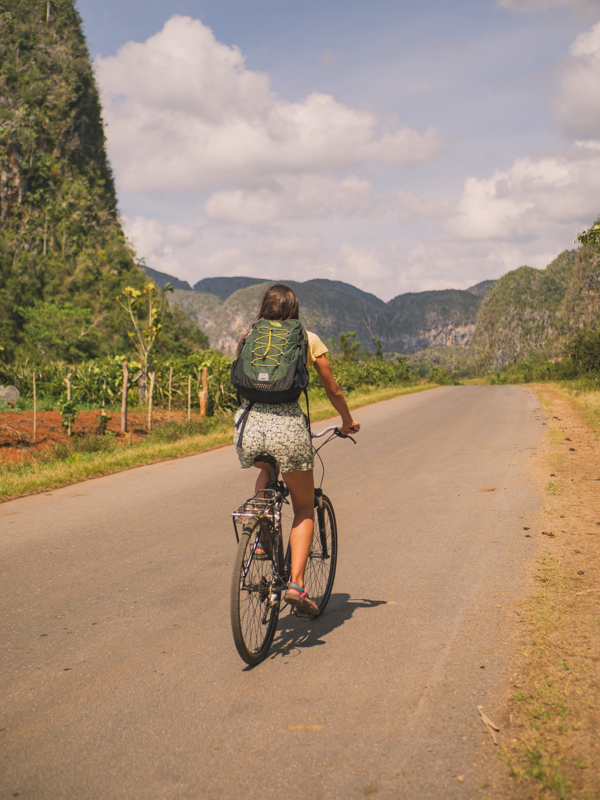
Cycling is also highly recommended. Ask your casa particular if they know where you can hire a bike – they usually know someone locally: a neighbour, a cousin, a mate. For about five quid a day you can get a basic bike, perfect for getting to the beach near Trinidad, or having a jaunt through the green valley of Viñales.
Some locals will think you’re barmy when you say you want to cycle – they simply don’t do it. Not because it’s not possible, but because many Cubans don’t get enough proper nutrition to build up the physical strength for it. Don’t let that put you off though. Cycling in Cuba is incredibly safe and perfectly doable. You do need to watch out for potholes in the road sometimes, but you needn’t worry about other traffic – there aren’t enough cars on the road to pose a risk. And the cars that are about will give you a wide berth and probably give you a toot or a wave.
Cycling gives you the most flexibility in Cuba, because otherwise you’re really stuck with agreed times with a taxi or the timetables of the tour coaches. So this is a relaxed way to explore the country. Are you planning to cycle in Cuba? Then take a puncture repair kit (or a couple) with you, not just for yourself on the road but also for the people who hire out the bikes. This isn’t available in Cuba either, so that way you’re helping them maintain the bicycles.
Can’t be bothered to cycle yourself? Then you can take a bicitaxi for a few penny’s. These run short distances within the towns.
March 2026: if you have the energy, go for a cycling holiday in Cuba. Transport is the biggest problem right now, as many accommodations and restaurants have secured generators or solar panels. So it’s mostly business as usual, aside from the gas to operate cars. So if you want to be sure to get from A to B, find a company that will rent you bicycles for your trip and go by yourself.
Transport in Cuba has quite some options
Transport in Cuba isn’t as straightforward as in most other countries. You need to think about it more carefully, but we found it all worked out fine. We really expected it would be more hassle, but we only had one tricky situation. This was purely down to misinformation from our casa host, who said there would be a local bus running on Sunday. But neither the buses nor the private collectivos were running. So bear that in mind too: Sunday isn’t the best day for travel if you want to book anything other than a collectivo.

But we actually saw the charms of Cuba reflected in the transport too. The fact that there’s always someone nearby with bikes and that taxis are sorted out for you so you can just enjoy your holiday. It ended up being completely stress-free, thanks to the helpful nature of the Cubans. And every type of transport was an adventure in itself. Long taxi journeys with stops along the way, where someone in the middle of nowhere had a pig on a spit, and cycling whilst zigzagging around the potholes in the road surface. Whatever you choose, it’s a good choice. (Except hiring a car at the moment, obviously.)





0 Comments