
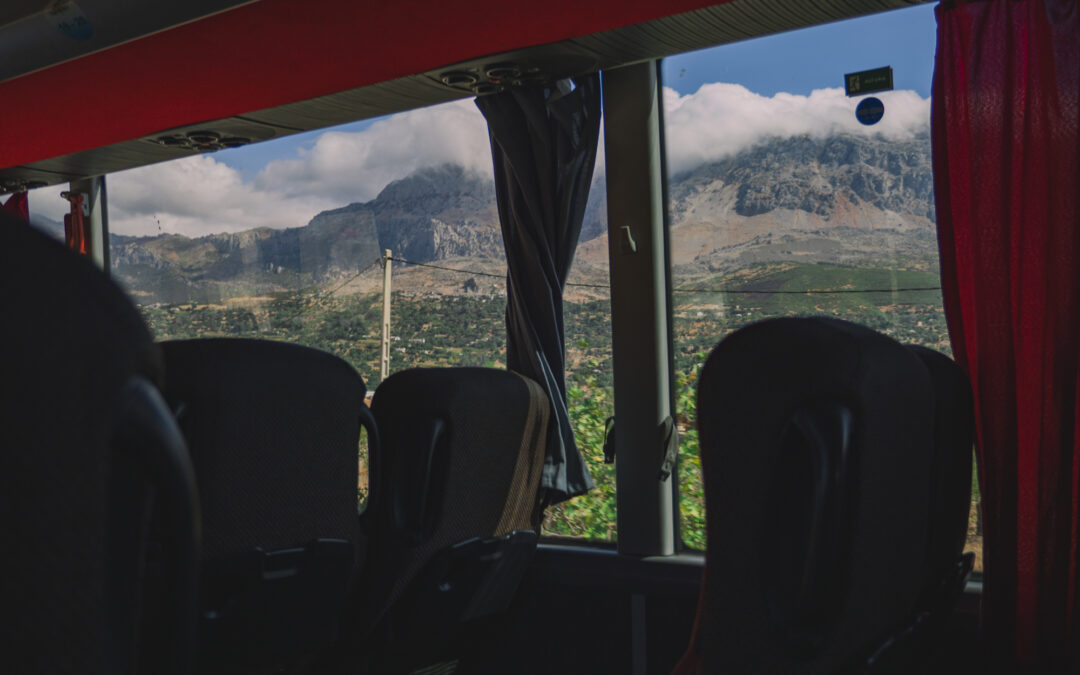
Morocco unfortunately is not one of the best countries for train travel, which in itself is not that strange. A very large part of the country consists of desert, and another large part consists of mountains. Not that it’s impossible to build through them, but those are expensive projects and they simply choose not to do so. In the north of Morocco, train travel works well. But once you arrive in Marrakesh (and also, for example, when travelling to Chefchaouen or Tétouan), you will have to do the rest by bus if you want to travel through Morocco on a budget or in a sustainable way.
It took me quite a lot of effort to find information about bus travel in Morocco, so here you’ll find everything I learned about bus travel in Morocco.
Why there’s so little information about bus travel in Morocco
A small explanation as to why you find so little information about bus travel in Morocco. They definitely exist, and locals use the buses as well. But Morocco is huge. Roughly from southern Sweden to halfway down Spain, if you were to lay the maps on top of each other. So if you want to travel from north to south, you’ll be spending quite a few hours on the road. That’s also why there are many domestic flights, even to the desert. Still, that is not the way to travel around.
Most tourists hire a travel agency with a private driver who drives them around. That’s faster, because they are allowed to drive faster (and they often drive even faster than that). So 12 hours by bus is often 9 hours by car, and stops are wherever you (and your travel companions) choose to stop. You can also ask for extra stops at beautiful viewpoints, for example, and you generally have a bit more comfort. This is what the tourism sector in Morocco largely runs on, which is why it can sometimes be difficult to find other ways of travelling in Morocco.
Bus travel in Morocco is really very doable, and you also have shared taxis as an alternative. But if you’re looking for comfort and have the budget, a private driver is a conscious choice. A lot of Moroccans depend on these jobs, so this helps keep them employed. In terms of emissions, buses are of course a slightly better choice when it comes to sustainable transport, and they are significantly cheaper. But in Morocco, both are considered sustainable choices.
What buses are there in Morocco?
For a round trip through Morocco, you will mainly end up using long-distance tour buses. These run between all major cities, all tourist locations, and many more places. This way, you can get almost everywhere — from a one-hour bus ride from Tangier to Tétouan, to a long 12.5-hour ride from Merzouga to Marrakesh. There is no FlixBus in Morocco, but the bus services work in a similar way.
There are many different bus companies in Morocco, but for tourists it usually comes down to these two:
These seem to serve the most locations and depart from local CTM bus stations. All bus stations are listed on Google Maps and are therefore easy to find, but they are usually located outside the city centre. This is often a 30–40 minute walk, or a short taxi ride.
(In my experience, a taxi is the easiest option, because the local city buses really don’t run on a logical schedule and the stops are 9 times out of 10 not shown correctly on Maps. Even with help from locals, I could barely figure it out.)
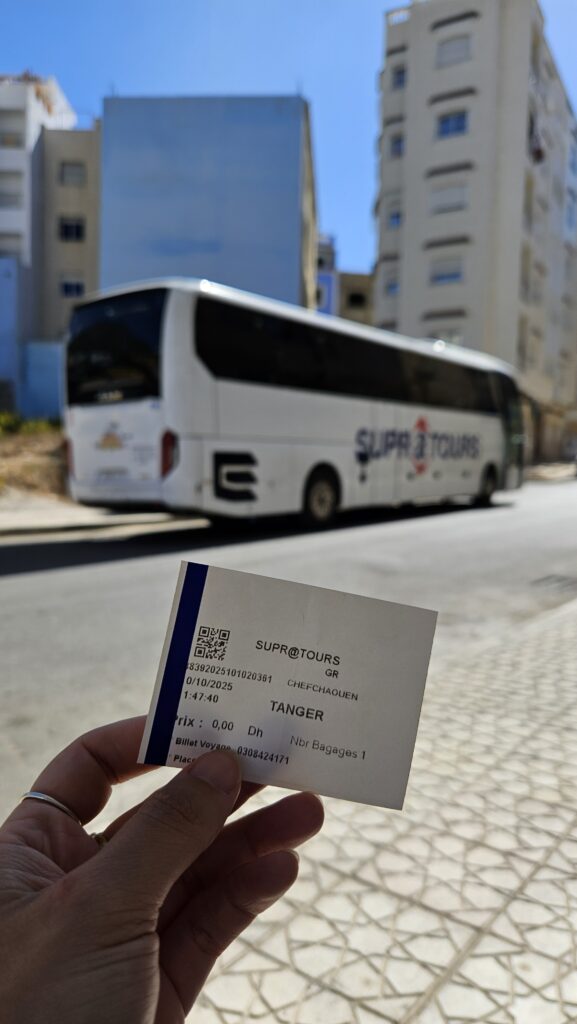
These are operated by the national railway company ONCF and offer bus connections “where the train can’t go”, as they like to advertise. With Supratours, you can choose your seat when booking online, which I personally saw as a big plus compared to CTM.
Because they connect with the rail network, Supratours buses usually depart from train stations — not from CTM bus stations. Unless there is no train station, in which case they sometimes share a CTM station, sometimes stop just around the corner, and sometimes have their own bus station altogether. That can take a bit of figuring out, which is why I often chose CTM instead. CTM stations are almost always clearly listed on Google Maps, so you know exactly where you’re going.
Other buscompanies in Morocco
There are many more, some of which were recommended to me by locals. Through the website or app Markoub, you can find all options. Sometimes these alternatives are significantly cheaper; sometimes they are almost the same price.
I took a different bus once — no idea which company it was. I arrived at the bus station, was asked where I wanted to go, and was directed to the correct platform, where the bus from Agadir to Marrakesh would depart in half an hour. I bought a ticket (only 5 MAD / €0.50 cheaper than CTM) and waited. Half an hour turned into 45 minutes, followed by “yes yes, the bus will arrive in 5 minutes”, and eventually the bus showed up with a half-hour delay.
I had just missed the CTM bus, but had seen online that it was only half full. The bus I boarded instead was completely packed. Clearly a bus used more by locals. That’s fine, of course, but it does mean more stops. Technically, you can ask the bus driver to stop randomly along the road so you can get off (only if you don’t have luggage in the hold), and locals do this more often than tourists. More stops means a longer travel time.
It got even better when we stopped somewhere near a toll road and I was pulled off the bus, because apparently my bus didn’t go all the way to Marrakesh after all, and I had to change to another bus that did go to Marrakesh. Luckily, the bus driver keeps track of how many people need to change buses, because otherwise I really wouldn’t have noticed. When not enough people got off, he went looking for the last person and found me, haha.
So yes, a bit of hassle and confusion. One advantage was that this bus stopped at the bus station on the edge of the medina, which is more practical than the CTM bus station. But I also know there are multiple bus stations in Marrakesh, so you really need to ask in advance where the bus will eventually stop. These are still good buses that will get you to your destination — but with more hassle, confusion, and delays. CTM and Supratours are more reliable and therefore my recommendation.
Which bus should you choose in Morocco?
Which bus you choose doesn’t really matter that much. Prices are almost the same, and if they run the same route, you can simply choose. In my experience, it’s often the case that one runs in the morning and the other in the afternoon, so you have a choice of departure time.
Sometimes, however, only Supratours serves a certain destination, such as Merzouga. In that case, you’re stuck with that option. There is also only one bus per day, so that really is your only choice. Otherwise, they are simply the same: both have air conditioning, both have luggage storage, etc.
Sometimes one bus station is slightly closer to the city centre or to your accommodation, making that the better choice. Or if you want to transfer to the train, Supratours is the better option. Other than that, it really doesn’t matter which one you choose.
One thing to watch out for: with CTM, you sometimes have an option labelled “locale”. These are local buses, not tour buses. I haven’t tried them myself, but another traveller told me it was really a collection of people and animals (and no, I’m not talking about dogs) pressed together. A fun local experience, but probably not very comfortable for long distances. The ones I saw were not cheaper, so I personally chose comfort.
Are there any local buses in Morocco?
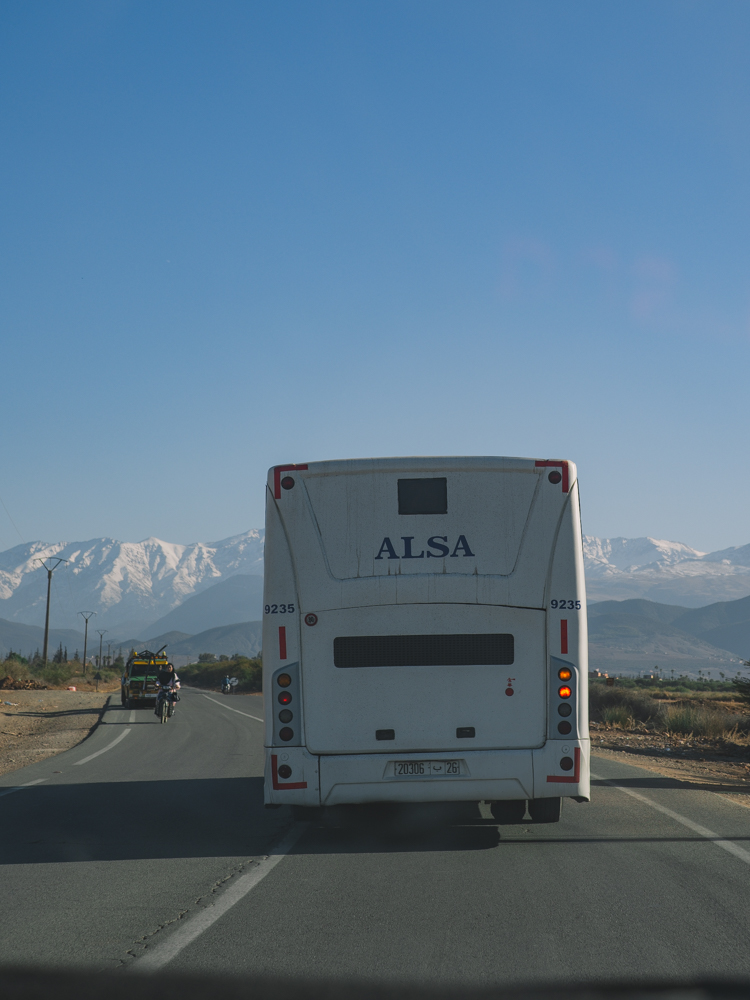
Yes, operated by Alsa. But don’t ask me how they work. There are city buses in the larger cities, sometimes covering distances to nearby villages. For example, there is a bus from Agadir to Taghazout with a stop in Tamraght. I tried taking this bus both ways, but both times waited 20 minutes longer and couldn’t find a bus. In Marrakesh, I tried multiple times as well, and either they didn’t show up or they were so completely full that you really couldn’t get on with luggage.
I also heard similar problems from other travellers: overcrowded buses and unclear information about where they stop. For example, driving straight past the train station, even though it was listed as a stop on Maps. The app doesn’t provide much clarity either. Buses here are simply not reliable and not easy to use.
If you really want to travel on a strict budget and are willing to take the time, you can wait for them. But I recommend, especially when leaving a big city, taking a shared taxi if there is no tour bus available. In the end, I paid 10 MAD for a shared taxi to Tamraght, while the bus cost 11 MAD. A private taxi costs six times as much, because normally six people fit into a grand taxi. On the way back, there were three of us and we paid 20 MAD per person. (10 MAD is roughly €1. This is the price for a 30-minute ride.)
There are also small green minibuses that cover short distances between small villages or from the city to surrounding villages. Sometimes longer distances, but mostly short ones. They work the same way as a grand taxi, but for 8 to 10 people. They are barely cheaper than a grand taxi, less available, and you sometimes have to wait longer for them to fill up than for a grand taxi. So they’re not really recommended either.
Airport buses in Morocco
Some cities have an airport shuttle. These are often operated by Alsa, the local bus company. These are the only buses that are easy to use. You’ll find them outside the airport, and the final stop is usually a train or bus station. In most cities they cost around 50 MAD (€5), while taxis cost between 150 and 200 MAD. A great option — just make sure to withdraw some cash at the airport, because you can’t pay by card. In Casablanca, there is also a train to the airport, which costs only 60 MAD.
Where can you go by bus in Morocco?
Really very far. You can even travel the full 18 hours from Agadir to Dakhla if you feel like it, and you can travel by bus to Merzouga or other desert areas. The bus is a very common means of transport in Morocco, because not everyone owns a car. So it is the alternative and will take you very far. To all major cities and tourist destinations, but also to small villages along the route and places you’ve never heard of.
Sometimes you’ll need a final half-hour taxi ride, because bus stations are often located outside the centre. But even then, it’s still a comfortable and affordable way to travel through Morocco.
Buses are generally much slower than cars. To get a rough idea of travel time, you can check the car route on Google Maps and double it. If you’re lucky, it will be 4 hours instead of 3, but especially longer journeys really do take longer due to breaks. (But realistically, you would probably take those breaks by car as well.)
Is your bus journey in Morocco too long and would you like to add a stop, but have no idea where to go? I can help you set up a custom travel route in Morocco. I shortened all my own journeys with stopovers and always have several suggestions. Read more about my services as a travel planner.
How often do buses run in Morocco?
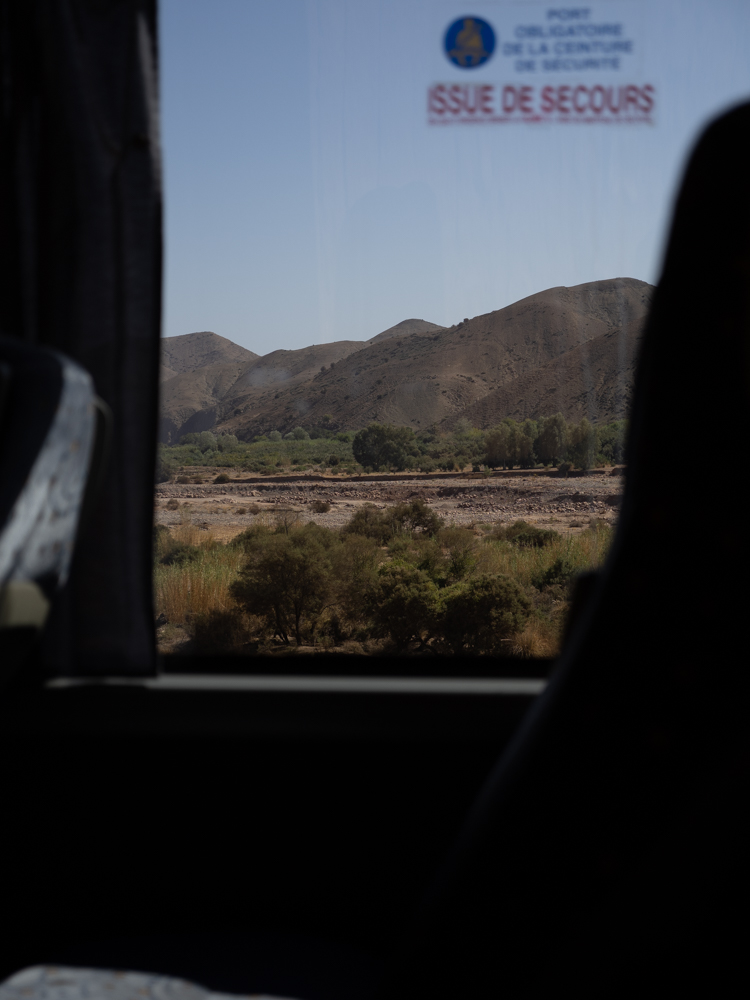
For some routes, there is only one option per day. This mainly applies to long routes of 7+ hours, to more remote destinations such as Merzouga. The bus from Tangier to Chefchaouen runs several times a day, making it easy to do a day trip with a bus in the morning and a bus back in the evening. (This is also a popular day trip, which is why there are many options.) But the short bus from Tinghir (Todgha Gorge) to Boumalne Dadès, for example, runs only three times a day, because it’s a less popular route — so they choose one in the morning, one in the afternoon, and one in the evening.
It really depends on how popular a route is and how many round trips they can make in a day. Sometimes you’re genuinely stuck with that one bus at 7 a.m.; sometimes you have options.
Want more flexibility? Then choose grand taxis — shared taxis that are often slightly faster and only marginally more expensive than buses.
Are there any nightbuses in Morocco?
Yes, and no. There are buses that travel through the night, for example from Fes to the desert, or the 18-hour bus from Agadir to Dakhla. But they are not night buses with beds like you might find in Thailand. They are also not cheaper than daytime buses. But if you want to save time, a night bus in Morocco is definitely an option.
How do you buy bustickets in Morocco?
You can buy tickets online or directly at the bus station. The websites of both CTM and Supratours work from abroad, so you can book a ticket before your trip. But that’s not really necessary. Bus tickets in Morocco have fixed prices. So buying a ticket one hour in advance costs the same as buying it three months in advance.
I travelled during high season (September–November) and only once experienced tickets being sold out. Most of the time, the bus was half full. Even when there was only one bus per day, that one bus wasn’t even full (which immediately explains why there aren’t more buses). So you can stay flexible, or book far in advance if you prefer.
Please note: usually you need to buy an extra ticket at the bus station for your luggage if you want to place a bag or suitcase in the hold. This usually costs around 5–7 MAD (€0.50). You’ll receive a label, like at the airport, and a receipt to prove it’s your bag. There are no rules regarding weight or size — it’s about the number of items.
How much does bustravel in Morocco cost?
Bus travel in Morocco is very affordable. A half-hour bus ride costs around €2 (20 MAD), and a long 8-hour journey costs between €15–20 (170–260 MAD). For example, the bus from Ouarzazate to Merzouga costs 170 MAD (8 hours), and from Marrakesh to Boumalne Dadès costs 155 MAD (7 hours).
Are buses in Morocco reliable?
Yes. In terms of transport, it’s just your typical tourist coach, like you’ll find in many other countries. Comfortable high-deck buses with air conditioning, reclining seats, and a luggage hold. There is usually no Wi-Fi and no toilet. The bus does (usually) stop every 3–4 hours at a roadside restaurant for food and toilet breaks. These breaks are often around half an hour, so you can actually order a proper meal. Sometimes they’re shorter if the stop doesn’t align with a typical mealtime.
Still, bring snacks and enough water to get through the journey, and make use of the toilet stops.
The buses are safe. Often they’re not full and you’ll have two seats to yourself. Of course, sometimes someone will sit next to you. The buses are used by both tourists and locals, and being on a bus is just as safe as being on the street. During stops, I often left my bag with my laptop and camera inside the bus, and nothing ever happened. Of course, it only takes one bad apple — but that’s true anywhere in the world.
In terms of travel times, buses in Morocco are surprisingly punctual. I expected significant delays, because Moroccans generally aren’t very strict with time and “I’m on my way” can mean they still need to shower. But in my experience (three months of travelling), the buses were always on time. Sometimes they picked up a bit of delay along the way, but this was often made up for later.
I was never more than 10 minutes late, and that was only on a long 8-hour journey. I’d call that on time.
Organized bustravel in Morocco
Are you looking more for organised bus trips in Morocco? That’s also possible. Besides private drivers, there are companies that offer group tours in Morocco. The advantage is that you don’t have to figure everything out yourself — you simply choose a trip that fits what you want to see. You get on the bus and get off at the next destination. No planning, no searching for bus stations.
The downside is that you don’t have the flexibility to add extra stops and might miss certain places. It’s a trade-off.
Fortunately, there are sustainable travel agencies that offer these trips. In the Netherlands, we have Sawadee and Djoser.nl, both of which offer sustainable travel. Each in their own way, they take local cultures, the environment, and the overall emissions of the trip into account. For example, you stay with local families or in accommodations that actively focus on sustainability, such as ecolodges.
Do you prefer a group trip with a mix of different people from different countries? Then go for G Adventures. Personally, I think they offer the most unique trips — and maybe I’m biased because they’re friends of mine — but G Adventures genuinely works with the nicest Moroccan guides.
Here is an example of a Morocco trip with G Adventures:
