
How to visit the Dutch tulip fields? A question that comes back every year, but luckily usually has the same answer. So here it is. The full in & out on how to visit the Dutch tulip fields, where to go, how to get there, what there is to see and do. This blog will be updated every year, so it’s up to date for the upcoming season. Keep in mind: even though the tulip fields are planted, it’s still nature and nature doesn’t let us dictate how it should act. Therefore the only detail that changes by the year, is the exact date of tulip season. But below you’ll also find useful links to websites where you can find the latest details if I haven’t updated the blog yet.
What are the Dutch tulip fields?
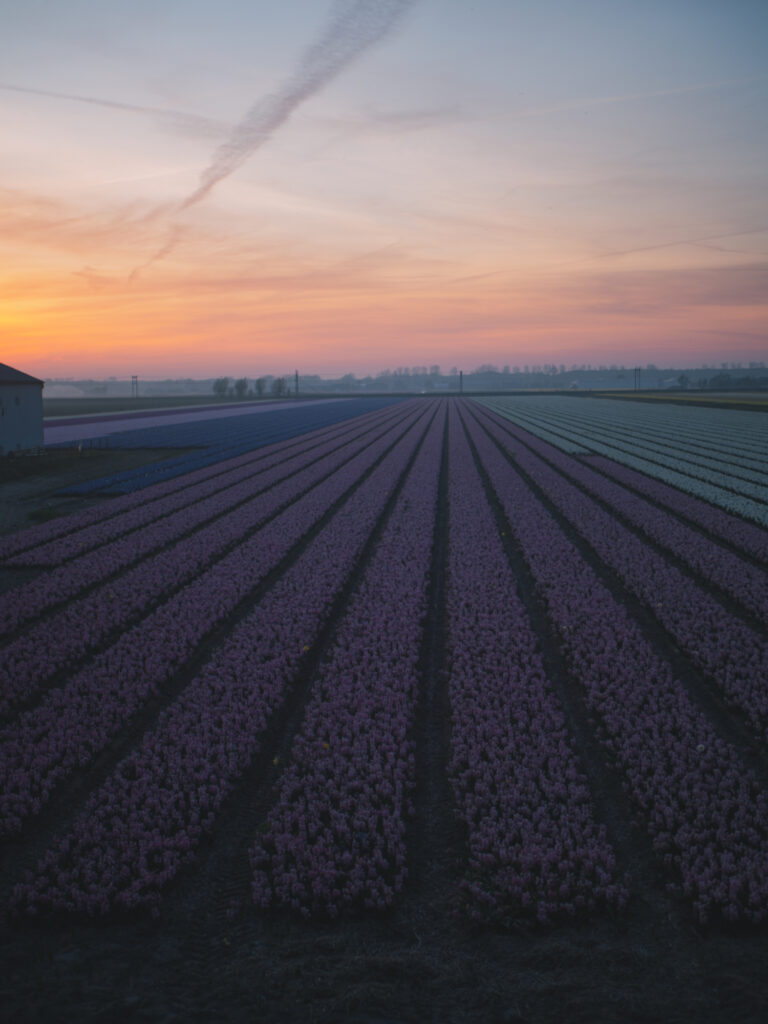
When people say “the Dutch tulip fields,” they’re usually talking about the Bollenstreek, the flower-farm region between Haarlem and Leiden. This is where you’ll find both the famous attractions and the real working fields. Those tulip farms plant tulips for export. They mostly sell the bulbs, although of course some sell the flowers as well. I’m not going to pretend I know how it works but the bulbs are stronger when they’ve already bloomed once (or even multiple times). So basically the flowers are just a cute side effect of the bulb harvest. HOWEVER: it’s important to know you can damage the bulbs by stepping on the flowers. So even if the flowers might not be sold (which you never know), DO NOT WALK IN THE FIELDS! These flowers are people’s full livelyhood, not something that exists for tourist entertainment. Cycle around the fields to enjoy the views, but don’t go in the fields, even if there isn’t a fence or line. Read more tips about a sustainable visit to the tulip fields.
Sad that you can’t walk into the fields? No need! Because we all know you love it, so some farmers came with solutions, for tourists to fully enjoy the Dutch tulip season.
- Keukenhof is the most famous tourist attraction. It’s a carefully designed flower park with millions of bulbs arranged into patterns, themed gardens, and pavilions. Basically a botanical garden fully dedicated to tulips. It’s polished, easy, and undeniably beautiful. However: it’s not the endless striped fields you see in drone shots. Tickets are around € 25.
- That more “open field” feeling is what places like Tulip Barn are built for. Here, you walk alongside rows of tulips with plenty of space (and props) for photos. It’s still curated, but it’s the tulip fields like you expect it and especially made for you and every other person who wants to run into the fields. You pay an entry fee (and maybe spend some money in the restaurant), which covers the cost of the project. They sacrificed a piece of the farmland for tourism. A smaller tulip field with tulips in every possible colour, where stepping on a few flowers doesn’t damage the business. (Although you’re still asked to be careful, so we can all enjoy the full season.) Tickets are around € 10.
- Then there’s De Tulperij, which is smaller and what we call a “pluktuin” or picking garden. They have small patches of different colours and for an entry fee you can pick your own tulips to take home. Tickets are around € 10, picked Tulips are paid based on size of the bouqet.
- Are you looking to learn a bit more about the farming process and the history of the Dutch tulips? (Which, spoiler alert, are originally from Türkiye) Then the Tulip Experience Amsterdam is a nice option. Despite the name, this is still not in Amsterdam, but the closest option from the city. It’s a bit of a mix of the above, with a small field and a picking garden alongside the museum. Tickets are around € 12,50.
The key thing to understand: no single place gives you everything. The magic happens when you combine a few of them. So read along for tips on how to visit the Dutch tulip fields.
How to get to the Dutch tulip fields?
As most tourists will stay in Amsterdam, there is a special Keukenhof Express bus between Amsterdam and the Keukenhof, but also from the city Leiden, on the South side of the Bollenstreek. This is a direct bus that drops you off at Keukenhof (obviously) and from there you can go to other places. You can take this bus from Amsterdam RAI and even from Schiphol airport. Within about 30–40 minutes, you’re dropped right at Keukenhof’s entrance. You can buy single bus tickets or a direct combination with an entry ticket to Keukenhof. All information, routes and prices on the Keukenhof website. Local buses aren’t the best option, as they don’t really stop at the fields but more in the towns around.
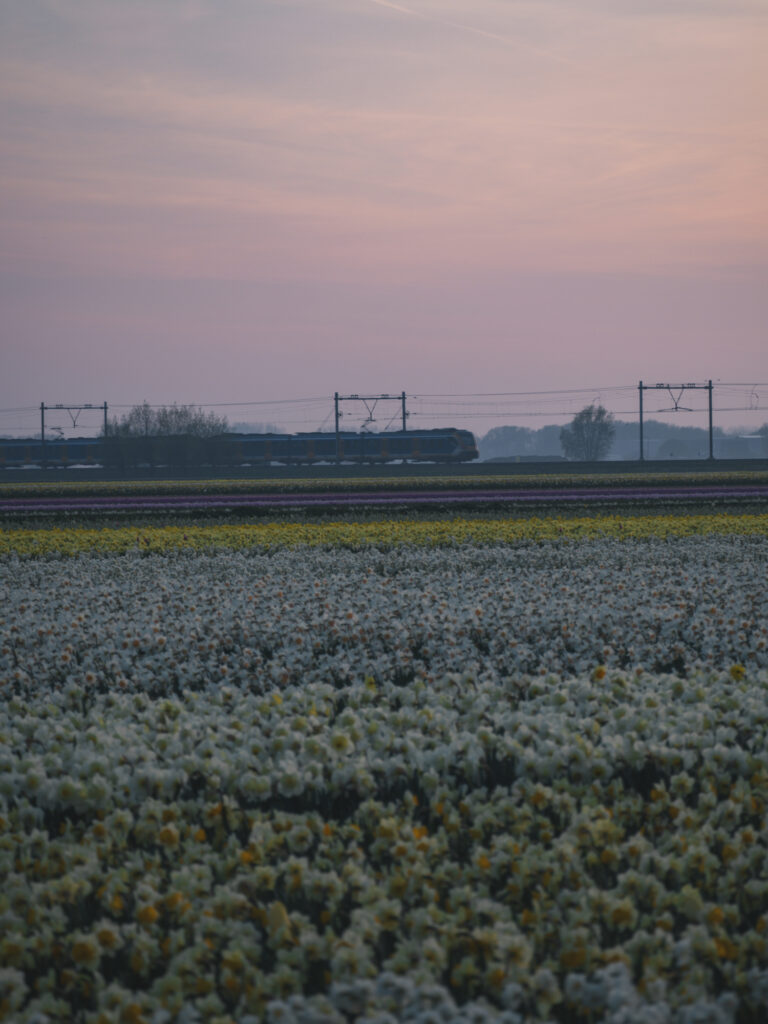
You can also take a train from Amsterdam to Hillegom, and rent a bicycle directly at the trainstation. You could walk, but it’s at least half an hour walking to get anywhere interesting so it’s best to rent a bike to get around the area. Another train to the tulip fields is the train to Sassenheim, which is a bit further South. It just depends on where exactly you want to go and how much time you have in the area. (And where you’re coming from, Sassenheim would be better from Leiden, The Hague or Rotterdam.)
Cycling around the tulip fields
Aside from renting a bicycle directly at Hillegom trainstation or in Sassenheim, you can also rent them conveniently at the Keukenhof or in the towns around. Once you’re in the Bollenstreek with a bike, the day becomes much more flexible. You can hop off your bike anywhere you want and enjoy the fields. Just again a reminder to not enter the fields. But you can take photo’s from the roads and enjoy the views and colours.
Keukenhof is a bit in the middle of it all, so you can cycle in any direction. The closest other attraction is the Tulip barn, which would be about 15 minutes cycling, depending on your speed. The Tulip experience is in the same direction but a bit further out, the Tulperij is in the other direction at about 20 minutes cycling.
The Tulip barn is also the closest from Hillegrom trainstation, with then Keukenhof as the next stop and the Tulperij as the last stop. Flip the trip around by taking a train to Sassenheim and renting a bike from there. This way you can first pick tulips at the Tulperij, enjoy the Keukenhof and take photo’s with your own fresh picked flowers at the Tulip barn.
Feeling sporty? You can also rent bicycles in Leiden and cycle from there, it’s about half an hour with an e-bike to get to the fields.
Prices for bicycles in the tulip fields start at € 5 for a normal bike, and up to € 30 for an electric bicycle.
Check out the flower map for the best viewpoints and fun cycling routes.
Doing tours to the Tulip fields
Overwhelmed by the choices or size of the region? There are plenty of tours to the tulip fields where you either just hop in a bus and get driven around, or get on a bicycle but follow a guide instead of your own maps.
You can find these tours on:
- Get Your Guide
- Tiquets
- Airbnb Experiences (for private tours or group tours)
- You can of course also google and find smaller local companies that offer tours to the tulip fields
When to visit the Dutch tulip fields?
So, like I said, the only question we can’t really answer until right before the season: the dates of the tulip season. In 2026 the dates are from the 19th of March until the 10th of May. However, many places opened a week later than planned and many flowers didn’t start blooming until the second week of April. Check the yearly opening dates on the website of Keukenhof or the website of the flower area “Bollenstreek“.
The best time to visit the tulip fields in The Netherlands is about halfway the season. So I recommend you to check the season dates in time, then go in week 3/4 for the best blooming period. No guarantee, but that’s your best bet to see as many flowers blooming.
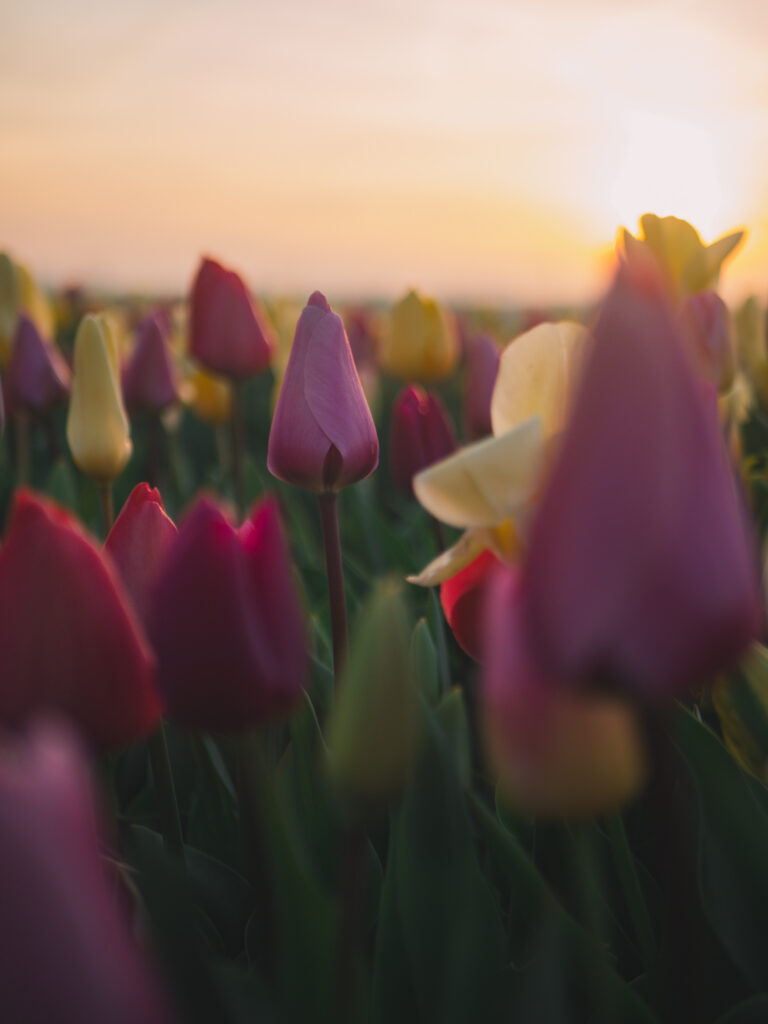
Not flexible with your dates? No worries. There will always be something blooming. Did you know the tulip season actually isn’t just about tulips? We also have Hyacinths and Daffodils who bloom before the tulips. So if you’re too early, you can enjoy those, in yellow, white, 2 shades of pink and purple. The Hyacinths are also the most smelly flowers, which makes cycling around the area an amazing experience. I wish I could share the smell on the blog because it absolutely brightens your days. Late in the season? Then the fields might be cut already, but Keukenhof remains open until their end date, so there’s always something to see.
Beyond the Bollenstreek: other tulip regions
If you’re looking for something less touristy, there are other parts of the Netherlands with massive flower fields.
- Flevoland has some of the largest tulip fields in the country—wide, open, and far less crowded.
- Goeree-Overflakkee and Zeeland offer a more rugged, coastal version of the experience.
These areas feel more “raw,” but they’re harder to reach without a car. And everywhere, the same rule applies:
The fields are private farmland. You can’t just walk into them unless it’s explicitly allowed.
Alternative base: Leiden
Full disclaimer: Leiden is my hometown and I’m 100% biased on this one. But as tulip season is one of the busiest tourist seasons in The Netherlands, Amsterdam gets insanely crowded. It already always is, but during these weeks it’s at its busiest. Which also means top prices. Are you looking for a way to visit the Dutch tulip fields, with an option to withdraw at the end of a long and busy day? Then Leiden is a great alternative. It’s incredibly pretty, looks a lot like Amsterdam, but has a lot less crowds. The Keukenhof bus runs from here as well and it’s a shorter distance if you wanted to bike to the fields. So, honestly, Leiden only has benefits as a base to visit the tulip fields.

Leiden is easy to reach from Schiphol, by a direct train, that’s not even much further than the train to Amsterdam. A highlight in the city is the ‘castle’ called De Burcht. Which is more like a fort, in the middle of the city. Stroll by the canals, have a Dutch lunch as the old markethall ‘De Waag’ and visit the place where famous painter Rembrandt was born. Unfortunately the old house doesn’t exist anymore but we’re pretty proud he was born in our city.
My recommendations for local hotels are NR22 Leiden, Pakasa hotel or Boutique hotel d’Oude Morsch. All hotels in stunning traditional buildings, to give you that typical Dutch feeling. Or of course you can just stay in the Bollenstreek itself. Just check your transport options before you book.


0 Comments