
Haggling; It’s not something we ‘Westerners’ are used to at all, which is why many people find it awkward. You don’t want to come across as stingy, you can’t be bothered with the hassle, or you think: oh well, that extra tenner won’t make me any poorer. That’s understandable. But in countries where bargaining is part of the culture, you can do more harm than good if you don’t haggle. Ultimately, it’s not about what you pay or how much money you have; it’s about the interaction and preventing prices from skyrocketing for the local population. Let me explain.
Haggling is about social interaction
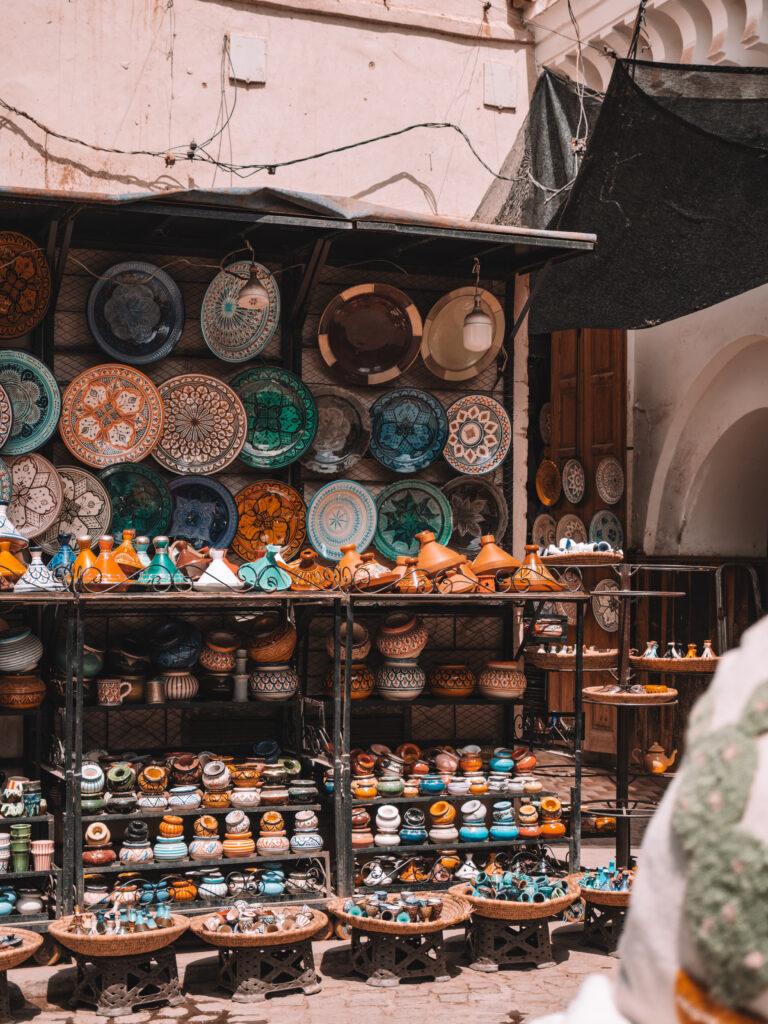
In many countries, haggling isn’t really even about the price. It’s about the social interaction. The moment of connection. The banter. There’s laughter, joking, and a bit of a chat. They ask where you’re from, you ask how long they’ve been running the shop, or you hear half a life story whilst haggling.
These are social moments that we in Europe are seeing less and less of. Here, making a purchase is becoming increasingly impersonal. Self-scan checkouts, online orders, no more eye contact. You pick up, you pay, you go. Done. I must admit I’m a huge fan of this! But there’s something to be said for those haggling sessions abroad. And as long as you’re respectful, it doesn’t matter if you end up walking away when you can’t agree on a price.
Example: I walked into a shop in Marrakesh with my camera and haggled over a dress. The shopkeeper wouldn’t go any lower on the price. At which point a friend of mine joked: “10% off in exchange for a photo?”
He agreed! Of course, there was more haggling afterwards, because my Dutch price per photo didn’t quite match what he’d once paid in Essaouira. But anyway, that’s all part of it.
Now, a year and several visits to Marrakesh later, that seller is a good friend of mine. It’s not that easy to make friends in Europe. So if you don’t haggle, you’re not just missing out on a lower price, but also on the social aspect. And that’s far more important than whether or not you end up with a good price.
Nót haggling damages the local economy
Then there’s another side to it that many people don’t see.
Imagine this: you spot a coat that you’d definitely pay €80 for back home. The seller starts with €60. You think: what a bargain! And you say yes straight away. To you, it feels like an absolutely brilliant deal, but for the local economy, it’s not a good move to simply accept the opening offer.
If they start at €60, the cost price is probably around €15. They expect you to haggle, but they also know that, as a tourist, you won’t be able to gauge the value anyway. Because €15 for a jacket? How on earth? So they expect you to end up paying somewhere around €30 or €40, provided you’re good at haggling. That’s a hefty profit for them, but for you it’s still a brilliant deal.
The local price
For locals, the haggling starts at €40 and ends around €20. So the opening price you’re quoted is, by definition, already higher than what locals pay. So if you’re thinking, “Yes, but I can afford it and it’s a good income for them,” remember that even with the best haggling skills, you’re still paying too much.
But suppose you immediately agree to €60. Then, as a tourist, you’re worth just as much as three locals who haggle hard. What will the seller think next time? “That tourist agreed so easily… let’s start at €80.” And so prices for tourists rise, and the gap with the local price keeps getting wider. Plus, it becomes much less appealing for the seller to sell to locals. Because if you can get 3 or 4 times as much money from one tourist as from the locals, you’ll focus on that.
And because they make less profit from locals, there’s a tendency to raise prices for them too. For you, that difference might be ‘only’ €10 or €15. For locals, it can be the difference between affordable and unaffordable.
So where you might think: oh, what difference does that small amount make, you’re unintentionally contributing to a system that makes things harder for locals.
Important to remember:
- As a tourist, you’re bound to end up paying too much anyway
- They have absolutely no qualms about making you pay far too much
- You don’t need to haggle fiercely or be particularly good at it, but make it clear that you won’t simply accept high prices
Should you always haggle?
No. Absolutely not.
Pure tourist trinkets? No problem. Feel free to pay double for your ‘I ❤️ [insert your favourite city]’ T-shirt. The locals don’t buy them anyway.
Are there price tags? Then that’s a fixed price.
Food? You don’t usually haggle over that either.
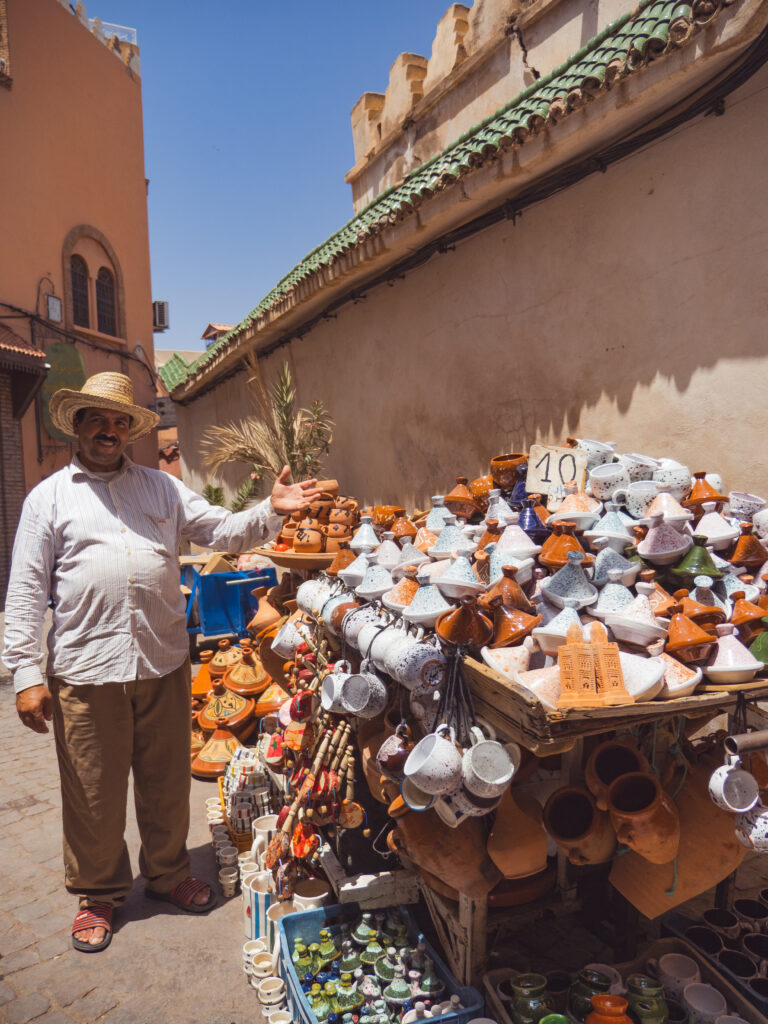
But when it comes to items that locals buy too — clothes, shoes, everyday items — haggling is important. Not to get the cheapest price possible, but to prevent prices from being systematically pushed up.
So the next time you think: I really can’t be bothered with this — remember this:
- You’re not just haggling for yourself.
- You’re haggling for the culture.
- And a little bit for the locals, too.
And who knows… you might, just like me, end up making a friend out of it as well.




)
0 Comments